
Reviewed · HIKING & TREKKING
Santiago: Longueira, Pico de Antónia & Monte Tchota Trek
Santiago’s highest peak is the main event here, but the day begins with something just as valuable: a close look at village life in Longueira. You visit a grogue distillery, a primary school, and Lemba Lemba Bar before heading into the hills. Then comes the hard climb to Pico de Antónia, followed by quiet Monte Tchota and broad views toward Fogo and Maio.
I like the mix of local contact and serious mountain walking, rather than a quick viewpoint stop. I also like the practical setup: hotel pickup in Praia, transport, a guide, picnic, insurance, and return transfer are all covered. The catch is clear: this is not a gentle nature walk. The longer route takes about six hours, includes roughly 1,050 meters of ascent, and can turn very slippery on the descent.
In This Review
- Key points at a glance
- Why this Santiago trek is more than a mountain walk
- Starting in Longueira: village life and grogue
- Climbing Pico de Antónia, Santiago’s high point
- Monte Tchota and Santiago’s native plants
- The two route options and what they mean
- The descent is where careful footing matters
- Guides, pace, and the human side of the day
- Is $106 a fair price?
- Who should book this trek?
- Should you book the Longueira and Pico de Antónia trek?
- FAQ
- Where does the tour start and finish?
- How long does the trek take?
- How far is the trek?
- How difficult is the hike?
- What should I bring?
- Is a picnic included?
Key points at a glance
- Longueira before the mountains: Visit a grogue distillery, primary school, and local bar for a glimpse of everyday village life.
- Pico de Antónia at 1,394 meters: Reach Santiago’s highest point and look across São Jorge Valley, with possible views of Fogo and Maio.
- Two route choices: The longer option covers about 9 kilometers and six hours, while the shorter option covers about 6 kilometers and four hours.
- A real uphill test: The route is rated very difficult or difficult, with narrow, uneven paths and steep sections near the top.
- Guides who add local connection: Ricardo, Djibril, and Admilson Garcia are among the guides associated with the excursion, and the guide team provides help on slippery sections.
- Good value at $106: Transport, hotel transfers, picnic, guide, and liability insurance make the price easier to justify for an all-day mountain outing.
Why this Santiago trek is more than a mountain walk
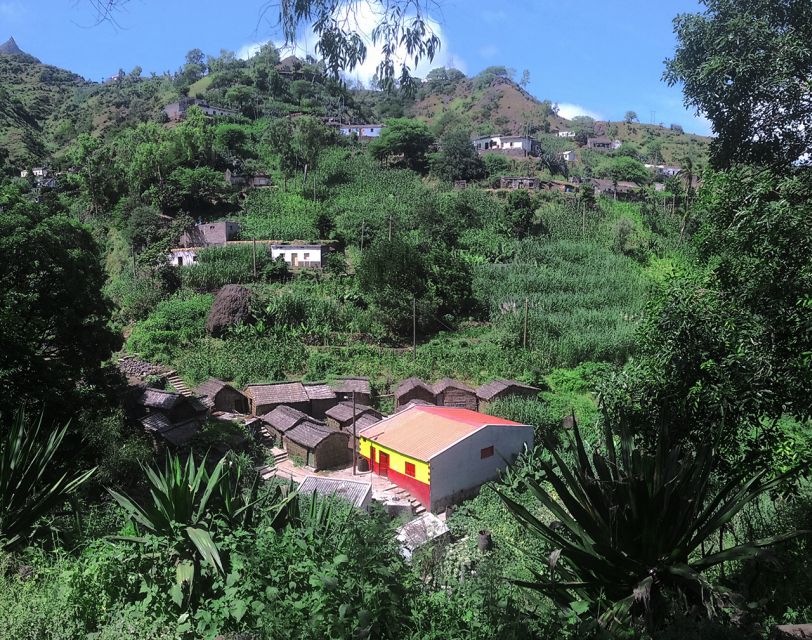
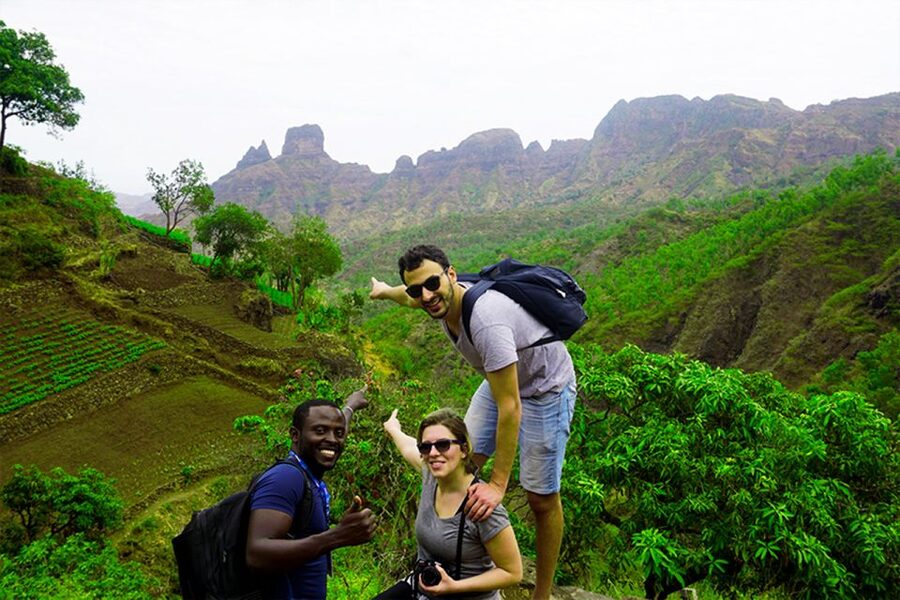
Many island hikes give you a trail and a viewpoint. This one gives you a fuller picture of Santiago. You start in Longueira, where the focus is on people and local work, then move through cultivated areas and mountain paths before reaching Pico de Antónia and Monte Tchota.
That change of setting is the best reason to book. You are not simply being driven to a trailhead, walking uphill, and returning to Praia. The day connects rural life, traditional rum production, high mountain scenery, native plants, birds, and protected natural areas.
I also appreciate that the excursion does not hide the effort involved. The longer route is marked as very difficult, and the shorter route is still difficult. Several sections are narrow and sloped, with a particularly steep final stretch. You should treat the grading seriously, especially if your usual holiday exercise is walking between cafés and museums.
The tour has a 4.8 rating from 10 reviews, with strong praise for the scenery, organization, and guides. The most useful pattern is not simply that the views are attractive. It is that the guides help with the hard parts, give advice on slippery ground, and know the area and its residents well.
A few more Praia trips to weigh up
- Serra Malagueta: Principal Valley Hike & Lunch with Locals
★ 4.7 · 64 reviews - Praia: Baobab Mysterious Tree, Green Valley & Old City Hike
★ 4.8 · 53 reviews - Santiago: Calabaceira Valley Trek & Visit to Cidade Velha
★ 4.8 · 49 reviews
Starting in Longueira: village life and grogue
Pickup begins at your hotel in Praia. From there, transportation takes you toward Longueira, a village setting that gives the day a human beginning before the physical work starts.
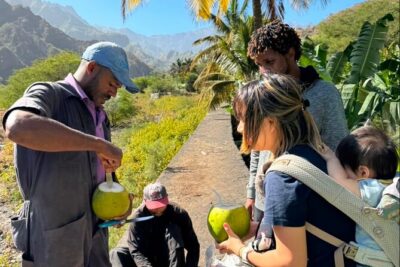
The stop at the grogue distillery is especially worthwhile. Grogue is Cape Verde’s traditional sugarcane spirit, and seeing it made connects the excursion to local agriculture and rural trade. This is not presented as a polished tasting-room visit. The appeal is the chance to see a local operation and meet people in the village.
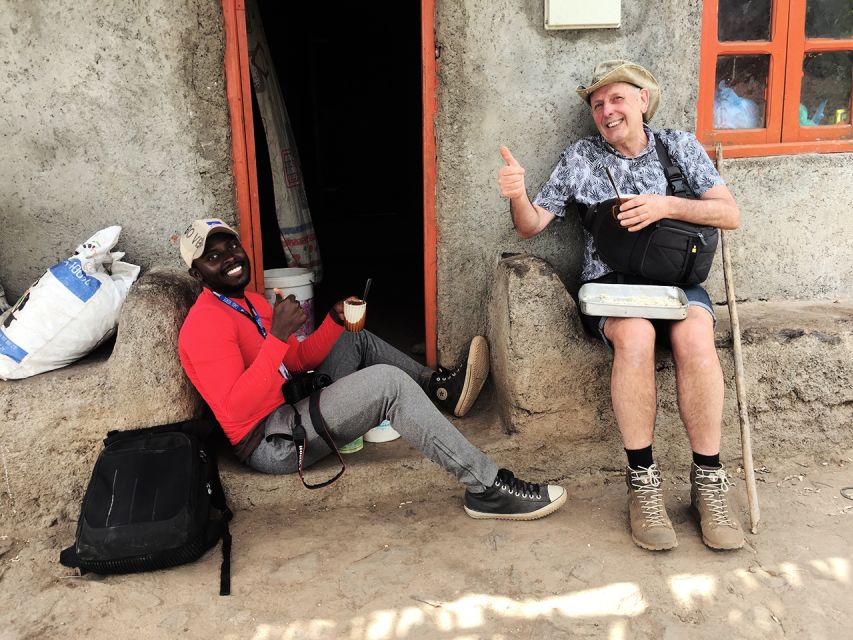
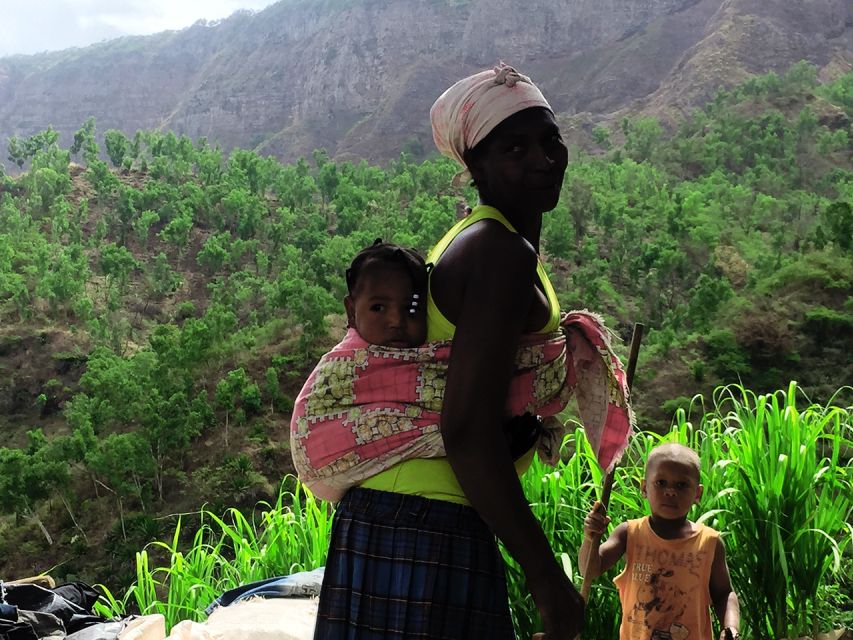
You also visit the primary school and Lemba Lemba Bar. These stops matter because they show ordinary community life rather than presenting Santiago only as a backdrop for photographs. If you value direct contact with local residents, this part may be as memorable as the summit.
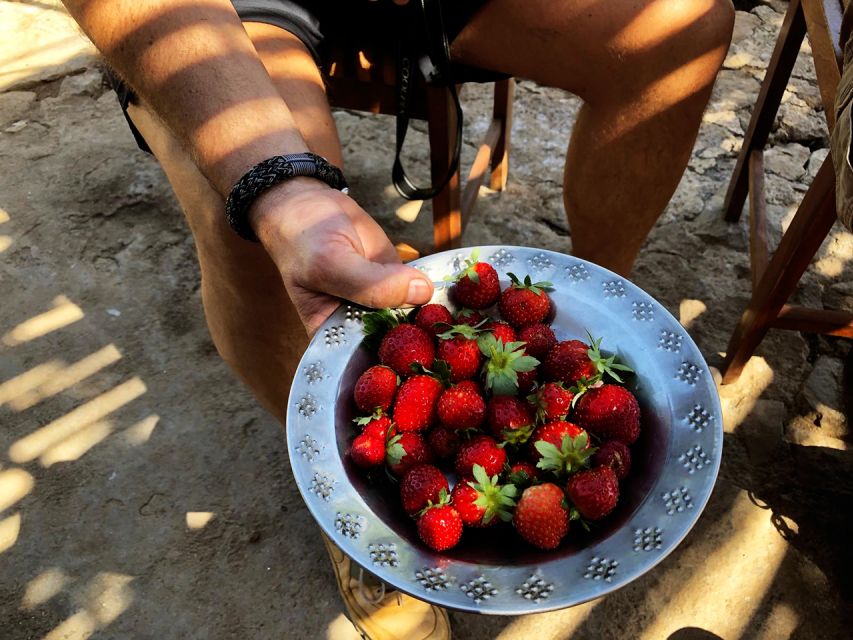
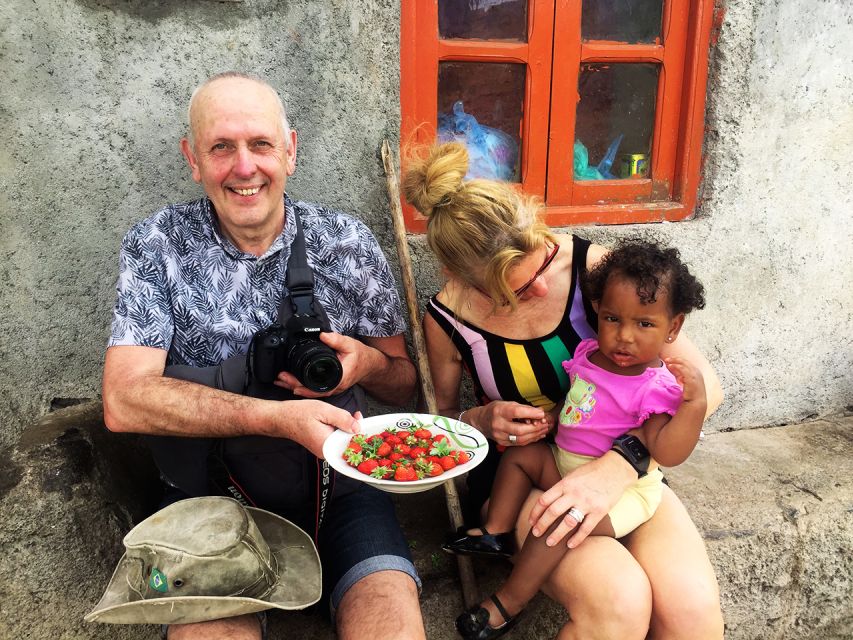
From December through May, the walk can include strawberry fields and a small picnic. Seasonal timing matters here. The strawberry-field portion is specifically tied to that period, so do not assume it will be part of every departure.
The village visit also helps pace the day. You are not thrown straight into the steepest section, and you get time to meet the guide and settle into the rhythm of the excursion. Still, the total outing is long, so the gentle opening should not fool you into expecting an easy day.
Climbing Pico de Antónia, Santiago’s high point
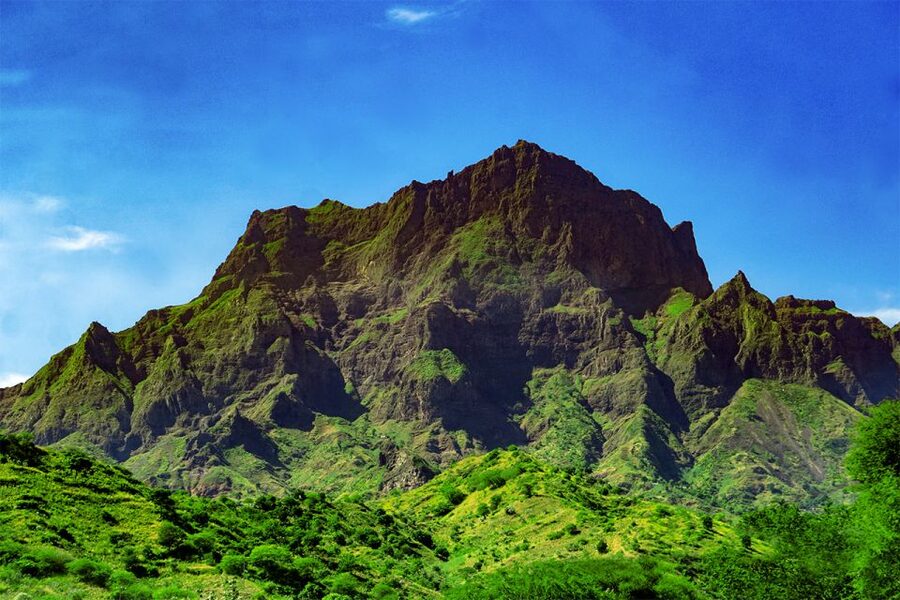
Pico de Antónia reaches about 1,394 meters, or 4,573 feet. The walking point is the high spot of the day, both literally and in terms of the views.
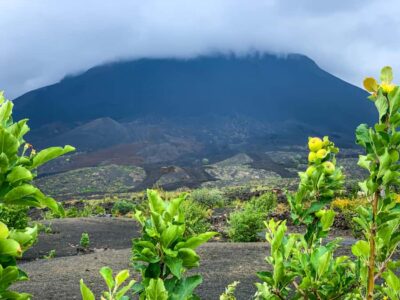
The climb passes through Santiago’s mountain country, where you can look for endemic plants, animals, and bird species, including some birds considered at risk of extinction. The exact sightings cannot be promised, so come for the setting and the chance to observe rather than for a guaranteed wildlife checklist.
The ascent is the demanding part. The full route includes about 1,050 meters of uphill gain, and the last meters become particularly steep. One useful detail from the excursion is that walking sticks may be provided, and bringing your own is strongly recommended. They can help with balance and reduce strain on the descent.
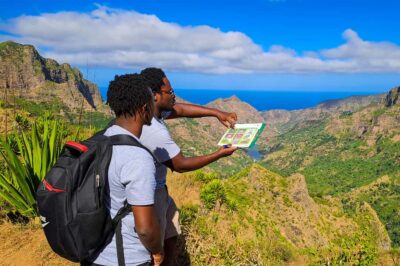
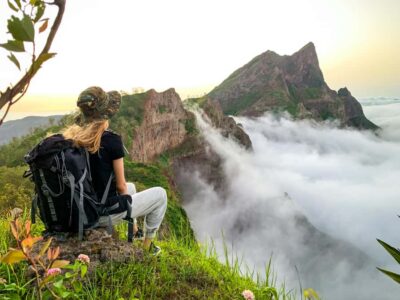
At the high point, the views open toward the São Jorge Valley. On a clear day, you may also see Maio Island and the volcano on Fogo Island. These distant-island views depend on weather and visibility, but the possibility adds a satisfying sense of scale to the climb.
I like the way the summit rewards steady effort rather than speed. The finish can feel like a small victory, but you should not rush to reach it. On a narrow, uneven path, a measured pace is safer and more comfortable than trying to stay with the fastest person in the group.
Monte Tchota and Santiago’s native plants
The trek finishes in the natural park of Monte Tchota, also called Monte Txota. This final section shifts the focus from the summit achievement to the natural setting.
Monte Tchota is described as an area of intact nature with notable plant and animal life. You may see endemic species and birdlife along the way, while the guide points out features that are easy to miss when walking alone. The park gives the day a quieter ending, with more attention on the surrounding ecology.
This is also where the trip feels less like a standard peak climb. The route links the high point with a protected area, so the reward is not limited to one panorama. You get changing scenery across the day, from village streets and agricultural ground to narrow mountain trails and wooded natural surroundings.
Do keep your expectations practical. The information provided does not promise a specific animal or bird sighting, and the route quality is described as narrow and sloped. Nature here is best appreciated with patience, not with the expectation of a controlled park visit.
Same archipelago, a completely different island day:
- Santiago: Landscapes, Street Art, and Markets Day Trip
★ 4.8 · 316 reviews - From Port of Praia: Island Tour for Cruise Ship passengers
★ 4.5 · 190 reviews - Praia & Cidade Velha: Guided City Tour
★ 4.8 · 80 reviews - From Praia: Boat Trip, Snorkeling, Cave & BBQ on the Beach
★ 4.6 · 45 reviews
The two route options and what they mean
The tour information gives two route files. The exact option used may affect how demanding your day becomes, so ask for clarification when booking if your fitness level is a concern.
Option 1: the longer route
- About 9 kilometers
- Around six hours of walking
- Approximately 1,050 meters of ascent
- Approximately 600 meters of descent
- Highest point around 1,390 meters
- Rated very difficult
- Narrow, sloped path
- One-way trail
This is the full mountain challenge. It includes the greatest height gain and the longest walking time. Choose it only if you are comfortable with sustained uphill walking and uneven ground.
Option 2: the shorter route
- About 6 kilometers
- Around four hours of walking
- Approximately 585 meters of ascent
- Approximately 186 meters of descent
- Highest point around 1,160 meters
- Rated difficult
- Narrow, sloped path
- One-way trail
Shorter does not mean easy. The reduced elevation gain makes this a more manageable choice, but the path remains narrow and uneven. It may suit someone who hikes regularly but does not want the full ascent of the longer option.
The general description also refers to about five hours uphill, with a picnic stop and scenic pauses. That wording suggests the longer version includes a substantial ascent before the final part of the route. Because the route options differ, confirm which path applies to your departure.
The descent is where careful footing matters
It is easy to think of the summit as the difficult part. On this trek, the return can demand just as much attention. The path may become very slippery on the way down, and the narrow, tilted surface makes balance important.
This is why proper hiking shoes are essential, not merely a nice extra. Trainers with smooth soles are a poor choice for this terrain. Hiking pants are advised, especially from August through November, when trail conditions and vegetation may make leg protection useful.
Walking sticks are also worth carrying. The guide team can provide them on some departures, but the safest plan is to bring your own if you use them. A stick helps on loose or slick ground, particularly when your legs are already tired from the climb.
The guides are a major part of the practical value. Ricardo is described as friendly and kind, Djibril as professional, attentive, and respectful, and Admilson Garcia as someone who knows the region and many of the people living there. The guiding team has also been praised for giving help and good advice on the descent.
Guides, pace, and the human side of the day
The tour is offered in English, Spanish, French, and Portuguese. That makes it easier to ask about the route, local life, plants, and safety as you walk.
A good guide matters here because the excursion has two different jobs. You need someone who can explain Longueira and its traditions, then someone who can manage a demanding mountain route. The named guides connected with this experience appear to bring a warm, personal approach as well as practical trail support.
Do not expect a race to the summit. A six-hour route with more than 1,000 meters of ascent needs a steady pace and sensible stops. The picnic break gives you a chance to eat and take in the views, but it is still a small meal: soft drink, sandwich, and fruit.
Bring extra water. Water is listed among the required items, and the included soft juice is not a substitute for a full supply. You should also pack a hat and sunscreen, even if the morning feels cool at higher elevation.
The shared group option requires at least two participants. If that minimum is not met, the operator may suggest another date, charge an additional amount to run the trip privately, or cancel with a full refund. That condition is worth knowing before you build other plans around the excursion.
Is $106 a fair price?
At $106 per person, this is not the cheapest way to see Santiago, but the inclusions make the cost reasonable for a full-day guided outing. You receive pickup and drop-off at your Praia accommodation, transportation, a guide, a picnic, and liability insurance.
The value is strongest if you want a structured mountain day without arranging separate transport to Longueira or the trail. You also gain a local guide for the village visit and the hike, which is useful on a narrow one-way route where navigation and footing matter.
The price is less compelling if you only want a short viewpoint walk or if you dislike organized excursions. This is a demanding, planned day with a fixed route and a group minimum. It is not a casual add-on between beach visits.
The included picnic is practical rather than lavish. Think sandwich, fruit, and a soft drink, not a full meal. Bring additional snacks if you know you need more food during a long climb.
Who should book this trek?
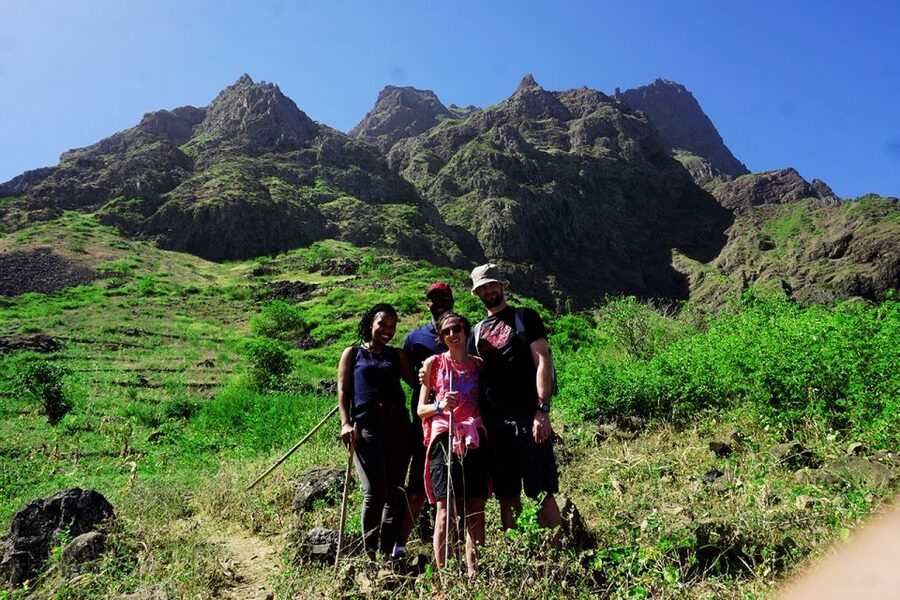
I would recommend it to experienced hikers who want to see a less polished side of Santiago. It suits you if you enjoy village visits, local production, mountain scenery, and a real physical challenge in the same outing.
It is also a good choice if you are staying in Praia and want transport handled for you. Hotel pickup and drop-off remove a major planning chore, while the multilingual guide options make the day accessible to a wider range of visitors.
I would hesitate to recommend it to anyone with limited hiking experience, poor balance, or unsuitable shoes. The difficulty ratings are direct, the last part of the climb is steep, and the descent can be slippery. If you are unsure, ask whether the shorter route is available and confirm its elevation and walking time before booking.
Give yourself the best chance of enjoying it by wearing hiking shoes, carrying water, sunscreen, a hat, walking sticks, and hiking pants. From August through November, the advice about hiking pants is particularly important.
Should you book the Longueira and Pico de Antónia trek?
Book this excursion if you want Santiago in several chapters: village life in Longueira, traditional grogue production, a demanding climb, wide island views, and Monte Tchota’s plant and animal life.
The strongest reasons are the local contact, the guides’ hands-on help, and the sense of achievement at the high point. The main warning is equally strong: this is difficult hiking, not a scenic drive with a short stroll.
At $106, the package offers solid value for an all-day experience with transport and guiding included. Choose it with realistic fitness expectations, confirm which route option applies, and arrive properly equipped. If you do, this can be one of the most substantial ways to experience Santiago from Praia.
FAQ
Where does the tour start and finish?
The tour includes pickup and drop-off at your accommodation in Praia. Transportation to and from the trekking area is included.
How long does the trek take?
The route options list approximately four hours of walking for the shorter route and six hours for the longer route. The general description also refers to about five hours uphill, so confirm the selected route when booking.
How far is the trek?
Option 1 covers approximately 9 kilometers. Option 2 covers approximately 6 kilometers. Both are one-way trails.
How difficult is the hike?
The longer route is rated very difficult, with about 1,050 meters of elevation gain. The shorter route is rated difficult, with about 585 meters of gain. Both use narrow, sloped paths.
What should I bring?
Bring a hat, hiking shoes, sunscreen, water, and walking sticks if you use them. Hiking pants are strongly advised from August through November.
Is a picnic included?
Yes. The picnic includes a soft drink, sandwich, and fruit.
Just added around Praia
- Hiking Águas Belas Cave★ 4.5 · 3 reviews
- Tour Old City/Discover Old Town★ 4.0 · 8 reviews
- Santiago Island: 4-Hour Calabaceira Valley Hike & Guided Tour to Cidade Velha★ 5.0 · 18 reviews
- Tarrafal Beach Tour: Boat Trip to the Lighthouse, Snorkel & BBQ Lunch★ 5.0 · 5 reviews
- Santiago Island: Private Airport Transfer to Praia or Vice Versa★ 5.0 · 3 reviews
- Best of Santiago Island: Cidade Velha, Workshop & Tarrafal Beach Tour★ 4.5 · 3 reviews
- Private Tour of Santiago – Discover the Island★ 4.5 · 18 reviews
- Santiago Island: Banana Plantation, Natural Park & Workshop with a local family★ 5.0 · 10 reviews
Hiking & Trekking, compared.
Serra Malagueta: Principal Valley Hike & Lunch with Locals
Read our review →
Baobab Mysterious Tree, Green Valley & Old City Hike
Read our review →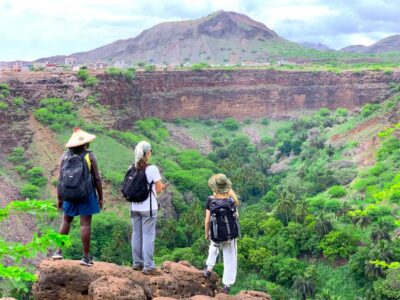
Monte Tchota Natural Park to Pico d’Antónia Hike
Read our review →
Browse the lists this tour appears in