
Reviewed · CIDADE VELHA HERITAGE TOURS
Santiago Island: 4-Hour Calabaceira Valley Hike & Guided Tour to Cidade Velha
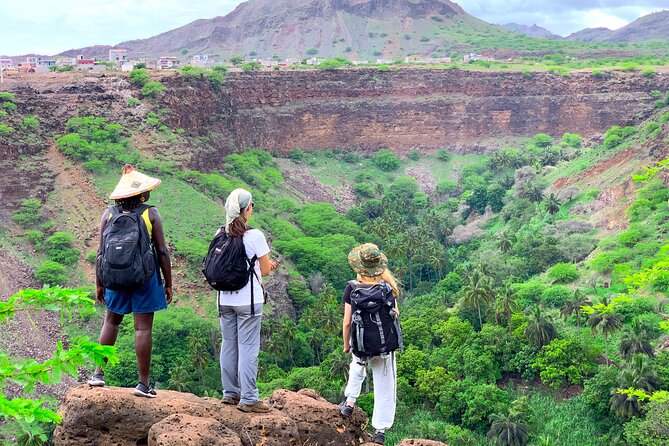
The most memorable part of this half-day outing is the change from Calabaceira’s green agricultural valley to the stone ruins of Cidade Velha. In one morning, you follow a simple downhill trail past a giant baobab linked to Charles Darwin, watch local farmers work sugar cane and cassava fields, then walk through the first Portuguese-built city in sub-Saharan Africa.
I like the way the tour joins nature and Cape Verdean history rather than treating them as separate stops. I also like the small maximum group of eight, the hotel pickup in Praia or Cidade Velha, and the chance to learn directly about farming from people working the land.
The main consideration is timing. Four hours gives you a useful introduction, but the stops in Cidade Velha are brief, and the €5 entrance fee for Fortaleza Real de São Filipe is extra. Wear proper shoes and hiking trousers, especially from August through November, when the trail can be more demanding on clothing.
In This Review
- Key points to know before booking
- From Praia to Calabaceira’s green valley
- Walking past the baobab and farm fields
- Entering Cidade Velha through São Francisco Convent
- Rua Banana and the oldest colonial church
- The Pelourinho and the difficult story of Cidade Velha
- Sé Cathedral ruins and the scale of the old city
- Fortaleza Real de São Filipe and the best view
- What the $81.30 price gets you
- Timing, difficulty, and practical limits
- Who will get the most from this tour
- Should you book the Calabaceira and Cidade Velha tour?
- FAQ
- How long does the tour last?
- Where does pickup take place?
- How far is the hike?
- Is the hike difficult?
- Is the fortress entrance included?
- What is included in the price?
Key points to know before booking

- A 5-kilometer downhill walk: The trail takes about two hours, with roughly 186 meters of descent and only about 3 meters of ascent.
- A giant baobab on the route: The tree is associated with Charles Darwin’s passage through Santiago.
- A working agricultural valley: You may see sugar cane, mango, cassava, bananas, and other crops, with local farmers explaining how the land is used.
- Cidade Velha’s major landmarks: The route includes Rua Banana, Nossa Senhora do Rosário Church, the Pelourinho, Sé Cathedral ruins, and São Francisco Convent.
- A small-group format: Shared groups are capped at eight people, and private options are available.
- A useful Praia day trip: Pickup, transport, guide service, insurance, and return to your accommodation are included in the $81.30 price.
From Praia to Calabaceira’s green valley

The morning begins with pickup at your accommodation in Praia at about 8:30 a.m. You can also arrange pickup in Cidade Velha, which is useful if you are staying there rather than in the capital. From Praia, the drive toward Calabaceira takes about 30 minutes.
That short transfer matters. You do not have to find a trailhead, arrange a taxi between two separate sights, or work out how to connect the valley with Cidade Velha on your own. Transport is part of the package, along with a guide and liability insurance.
Calabaceira lies in the southern part of Santiago. Its appeal is not a grand mountain trek. This is a modest, accessible walk through a cultivated valley, with the route moving generally downhill toward the coast and the historic town. The published figures describe about 5 kilometers of walking, two hours on foot, a maximum elevation near 200 meters, and a low point around 14 meters.
The trail has a medium tilt and is narrow at the beginning, though it is described as safe and suitable for most hikers. The elevation profile is important: you do not face a strenuous climb, but downhill walking still calls for shoes with a firm grip. The path quality is listed as medium, so do not arrive expecting a paved promenade.
More cidade velha heritage tours in Praia:
- Praia & Cidade Velha: Guided City Tour
★ 4.8 · 80 reviews - Santiago: Calabaceira Valley Trek & Visit to Cidade Velha
★ 4.8 · 49 reviews - From Praia: Cidade Velha, Tarrafal & East Side Island Tour
★ 4.8 · 23 reviews
Walking past the baobab and farm fields
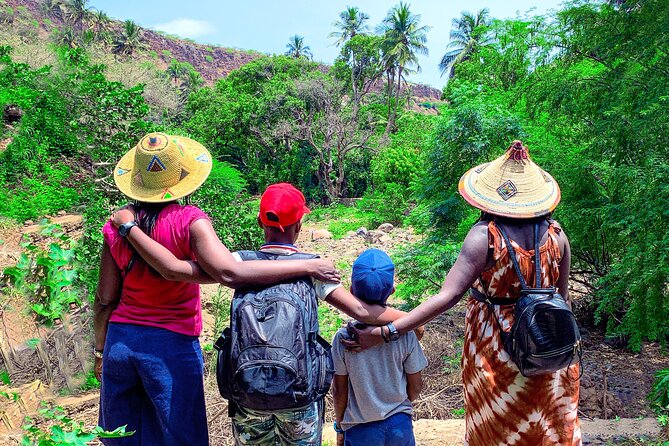
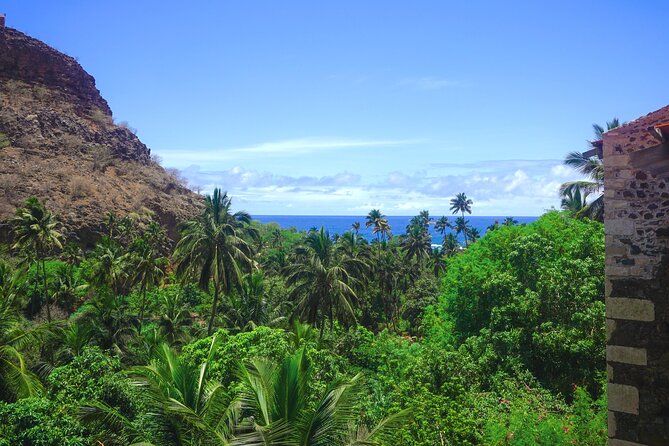
The hike begins near Igreja Calabaceira and continues through vegetation that can look surprisingly green against Santiago’s generally dry climate. The route gives you a closer look at how people use the valley, rather than showing you only a scenic view from a vehicle.
Local agriculture is a central part of the walk. You may see fields of sugar cane, mango, cassava, bananas, and other crops. The guide helps connect these plants to daily life, and contact with local farmers gives the walk a human scale that a standard sightseeing drive misses.
One special marker is the giant baobab tree associated with Charles Darwin’s visit to Santiago. It is the sort of detail that gives the walk a clear focal point. You are not simply following a path through plants. You are seeing a tree tied to the island’s place in the story of natural history.
Guide quality matters here. Ailton has been especially praised for explaining both the plants and the surrounding area, while Maria is noted for bringing together information about plants, birds, history, and local life. The company also sometimes includes apprentice guides, adding another local voice to the outing.
The walk lasts around two hours, but the pace will depend on the group and the time spent speaking with farmers or examining plants. The route is described as easy, yet I would not confuse easy with effortless. Narrow sections, a downhill grade, warm weather, and rough patches can make the right equipment important.
Bring:
- Decent walking shoes
- Water
- A hat
- Sunscreen
- Hiking trousers, especially from August through November
The advice about trousers is practical. Vegetation can brush against your legs, and shorts may be less comfortable on the narrow opening section of the trail. The activity is intended for people over six, but adults should still judge a child’s ability to manage a two-hour walk on an uneven downhill path.
Entering Cidade Velha through São Francisco Convent
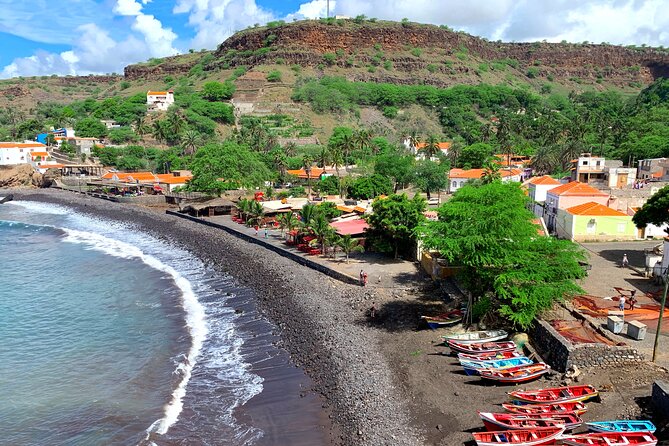
After the valley walk, the tour turns to Cidade Velha, the historic settlement west of Praia. The town is a UNESCO World Heritage Site and carries an importance that is easy to underestimate if you see it only as a collection of old stone buildings.
The first listed stop is São Francisco Convent, built in the middle of the 17th century. It served as a place of worship and religious formation. The visit is scheduled for about 10 minutes, so expect a concise explanation and a look at the remains rather than a long museum-style visit.
That short stop suits the tour’s structure. The morning is built around several landmarks, each offering one piece of the town’s story. You get a broad introduction, though you will not have much time for extended examination at any single site.
Rua Banana and the oldest colonial church
Rua Banana is described as the first urbanized street built by the Portuguese in sub-Saharan Africa. It is a quick stop, but it helps you picture how Cidade Velha developed as a planned colonial settlement.
The street is followed by Igreja Nossa Senhora do Rosário, built in 1495. It is presented as the oldest colonial church in the world and is known for its Manueline, or Portuguese Gothic, style. The church gives the tour a stronger architectural focus after the natural setting of Calabaceira.
You should expect about 10 minutes at the church. That is enough for the guide to point out its age and style, but not enough for a slow architectural study. If religious art or early Portuguese buildings are a major interest, you may wish you had extra free time afterward.
Still, the stop is valuable because it makes Cidade Velha’s age tangible. The town is not simply old by Cape Verdean standards. It belongs to the earliest period of Portuguese expansion in the Atlantic, and the church is one of the clearest surviving reminders of that era.
A few more Praia trips to weigh up
- Serra Malagueta: Principal Valley Hike & Lunch with Locals
★ 4.7 · 64 reviews - Praia: Baobab Mysterious Tree, Green Valley & Old City Hike
★ 4.8 · 53 reviews - Santiago: Monte Tchota Natural Park to Pico d’Antónia Hike
★ 4.8 · 43 reviews - Serra Malagueta Natural Park Hike & Relaxing Swim at Tarrafal Beach
★ 5.0 · 30 reviews
The Pelourinho and the difficult story of Cidade Velha
The Pelourinho, or pillory, dates from 1512 and is made of white marble. It was used as a slave market. This is an important stop, but also one that deserves a serious tone.
The tour does not present Cidade Velha only as an attractive old town. It points toward the painful human cost of the colonial system and the Atlantic slave trade. The pillory is a physical reminder that commerce, religion, and political power were tied to forced labor and human trafficking.
You will spend about 10 minutes here. That is a brief window for such a weighty subject, so listen closely to the guide’s explanation. A strong guide can help you understand why the monument matters without reducing it to a quick photo stop.
This is one reason I prefer the guided format over wandering alone. The stones and ruins do not explain themselves. The guide gives you the links between the buildings, the port, Portuguese rule, religious institutions, and the people whose lives were controlled here.
Sé Cathedral ruins and the scale of the old city
The ruins of Sé Cathedral offer another glimpse into Cidade Velha’s former importance. It is described as the first cathedral built in Africa by the Portuguese.
Again, the planned visit lasts around 10 minutes. The ruins are not presented as a long independent visit, but as part of a walking story that moves through the town’s religious and civic centers. You will see how ambitious the settlement was and how much of its former role survives only in fragments.
The cathedral stop also balances the earlier church visit. Nossa Senhora do Rosário remains an active architectural presence, while the cathedral is encountered through ruins. Together, they show both survival and loss.
Fortaleza Real de São Filipe and the best view
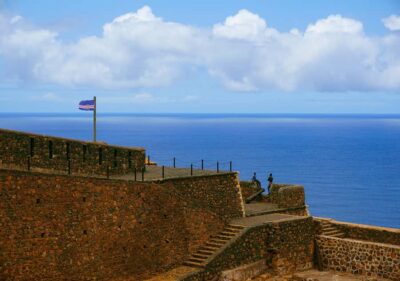
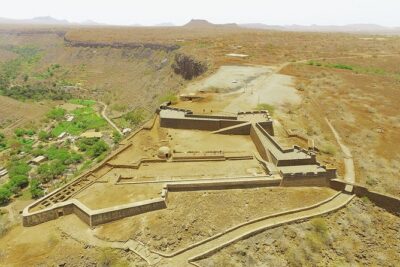
The final major stop is Fortaleza Real de São Filipe, built in 1587 to defend Cidade Velha against pirate attacks. The fortress sits above the old town, giving you a broad view over the settlement and the surrounding coast.
This is the most scenic finish to the historical portion of the tour. From the top, the guide explains the defensive system and why the fort was placed where it was. The view also helps you understand the relationship between the town below, the valley you walked through, and the sea routes that made the settlement important.
The fortress entrance costs €5 per person and is not included. Bring this extra amount if you want to enter. The scheduled visit is about 20 minutes, longer than the other Cidade Velha stops, which makes sense because the fort offers both a physical site and a viewpoint.
The extra fee is modest, but it changes the value calculation slightly. At $81.30 per person, the tour already includes transport, pickup and drop-off, a guide, insurance, and the valley walk. You should simply add the fortress ticket to your budget rather than assume every stop is covered.
What the $81.30 price gets you

The price is easiest to judge against the logistics. You are paying for a four-hour combined outing from Praia, not only for a guided walk. The package includes transportation, hotel pickup and drop-off, a guide, and liability insurance.
That is useful on Santiago, where combining Calabaceira with Cidade Velha independently would require arranging transport and coordinating timing. The tour also gives you access to local explanations about agriculture, plants, birds, architecture, religion, colonial power, and the slave trade in one compact morning.
A shared group is limited to eight people, which is smaller than the large coach format often used for major attractions. A small group makes it easier to hear the guide on a narrow trail and easier to ask questions. Private options are also available, though the supplied price is listed per person and does not specify the private supplement.
The value is strongest if you are visiting Santiago for the first time and want a broad introduction. It is less compelling if you only want a long, quiet hike or a detailed architectural tour. The itinerary gives you a little of both, but it does not offer long free periods at the monuments.
Timing, difficulty, and practical limits
The activity runs for about four hours, including the drive from Praia and the return transfer. The actual walking portion is around two hours, with the remaining time divided among transport and Cidade Velha’s historic sites.
The route is one way, with about 186 meters of descent and almost no ascent. That is friendly for anyone who dislikes uphill trekking, though a steep downhill section can still challenge knees and balance. The trail is narrow near the start and has a medium tilt, so sturdy footwear is more useful than fashionable sandals.
Most people can participate, and the stated minimum age is over six. The tour is not described as wheelchair accessible, and the narrow, tilted trail would make it unsuitable for anyone who cannot manage uneven ground. If you have concerns about mobility, ask the operator before booking.
Weather and clothing deserve attention. Water, sunscreen, and a hat are basic needs. Hiking trousers are strongly advised from August through November because of the vegetation along the route.
The tour offers free cancellation up to 24 hours before the start time. If you cancel later, the payment is not refunded, and changes inside that 24-hour window are not accepted. The activity also requires a minimum number of participants, so an operator cancellation for that reason results in another date or experience, or a full refund.
Who will get the most from this tour
I would recommend this outing to first-time visitors who want to understand Santiago beyond Praia. It gives you a look at the island’s farming, ecology, colonial architecture, religious history, military defenses, and connection to the Atlantic slave trade.
It also suits active visitors who want a walk without committing to a difficult full-day mountain route. The trail is listed as easy, and the total walking distance is manageable, but you should still be comfortable on a narrow downhill path.
Families with older children may find the format workable, since the minimum age is over six and the route is accessible for most hikers. Bring water and do not assume that every child will enjoy two hours on foot simply because the grade is not steep uphill.
History-focused visitors will appreciate the sequence of sites in Cidade Velha. The limitation is depth. Ten minutes at several landmarks creates a strong first look, not a specialist tour.
Nature-focused visitors should book if they want local agriculture and plant life alongside a historic town. If your main goal is birdwatching or a long botanical walk, the two-hour valley section may feel too short.
Should you book the Calabaceira and Cidade Velha tour?
Book it if you want a well-organized first look at Santiago and like the idea of combining a gentle valley walk with major historic sites. The strongest parts are the agricultural setting, the Darwin-linked baobab, the small group size, and guides such as Ailton and Maria, who bring useful detail to the plants, birds, and local past.
Think twice if you want a slow, specialist visit to each monument or a demanding hike. The schedule moves briskly, the fortress costs an extra €5, and the trail still calls for proper shoes.
For most first-time visitors staying in Praia, the combination is good value. You see a side of Santiago that a city tour misses, then gain context for Cidade Velha without arranging several transfers yourself.
FAQ
How long does the tour last?
The experience lasts approximately four hours, including transportation from Praia, the Calabaceira walk, visits to Cidade Velha, and return drop-off.
Where does pickup take place?
Pickup and drop-off are offered at your accommodation in Praia or Cidade Velha. The listed start time is 8:30 a.m.
How far is the hike?
The walking distance is approximately 5 kilometers. The walking portion lasts about two hours and follows a one-way route.
Is the hike difficult?
The route is described as easy and suitable for most hikers. It has roughly 186 meters of elevation loss, very little ascent, a narrow beginning, and a medium-tilt path.
Is the fortress entrance included?
No. Entry to Fortaleza Real de São Filipe costs €5 per person and must be paid separately.
What is included in the price?
The $81.30 price includes accommodation pickup and drop-off, transportation, a tour guide, and liability insurance. Lunch and the fortress entrance are not included.
Just added around Praia
- Hiking Águas Belas Cave★ 4.5 · 3 reviews
- Tour Old City/Discover Old Town★ 4.0 · 8 reviews
- Tarrafal Beach Tour: Boat Trip to the Lighthouse, Snorkel & BBQ Lunch★ 5.0 · 5 reviews
- Santiago Island: Private Airport Transfer to Praia or Vice Versa★ 5.0 · 3 reviews
- Best of Santiago Island: Cidade Velha, Workshop & Tarrafal Beach Tour★ 4.5 · 3 reviews
- Private Tour of Santiago – Discover the Island★ 4.5 · 18 reviews
- Santiago Island: Banana Plantation, Natural Park & Workshop with a local family★ 5.0 · 10 reviews
- Ribeira da Barca: Boat Trip to the Cave, Snorkeling and BBQ on the beach★ 5.0 · 10 reviews
Cidade Velha Heritage Tours, compared.

Like Locals: Praia and Cidade Velha Tour + Local Pontxi Tasting
Read our review →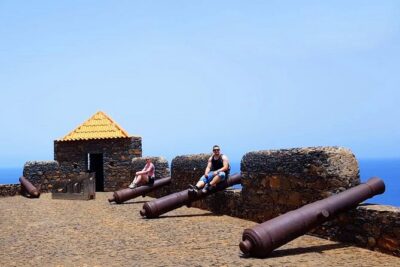
Best of Praia & Cidade Velha Tour, a World Heritage Site
Read our review →
Guided City tour Praia with Cidade Velha (World Heritage)
Read our review →
Shore Excursion: 3-Hour Guided Historic Tour of Praia & Cidade Velha
Read our review →Browse the lists this tour appears in