
Reviewed · CIDADE VELHA HERITAGE TOURS
Santiago: Calabaceira Valley Trek & Visit to Cidade Velha
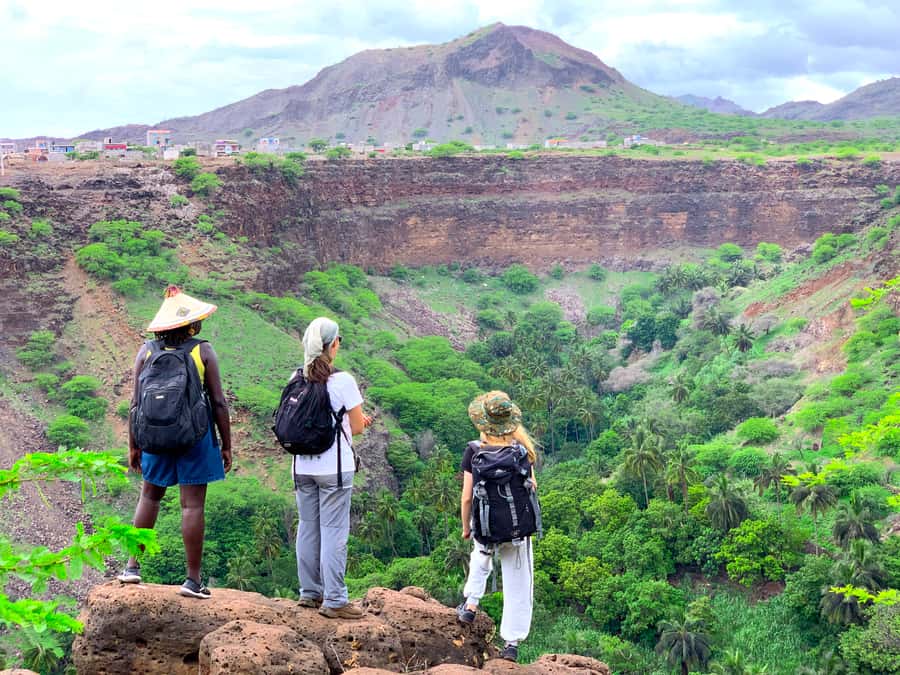
Calabaceira Valley gives you one of Santiago’s biggest surprises: a green, shaded ravine on an island better known for dry hills. You walk past baobabs, sugar cane, banana plants, and mango trees before reaching Cidade Velha, the first European-built city in sub-Saharan Africa.
I like the pairing of nature and history, and I like that guides such as Mario, Katia, Ivana, Soraya, and Riccardo have been praised for being friendly and well prepared. The main caution is the word easy. The trail is rated easy, but it is narrow and steep in places, and one outing lasted almost eight hours instead of four.
In This Review
- Key points to know before booking
- Why this Santiago day trip works so well
- From Praia to the top of Calabaceira Valley
- Walking through the Green Valley
- Seeing rum production beside the fields
- Entering Cidade Velha, Santiago’s old capital
- Lunch by the sea in a typical restaurant
- The slave market and the difficult story of Cidade Velha
- The climb to São Filipe Fortress
- How easy is the hike really?
- Shared group or private tour?
- What the $82 price really covers
- Who should book this Santiago excursion?
- FAQ
- Where does the tour begin and end?
- How long is the activity?
- How far is the trail?
- Is the hike difficult?
- Is the route suitable for people with mobility impairments?
- What should I wear and bring?
- Is lunch included?
- What languages are available?
- Is the São Filipe Fortress entrance included?
- Can I book a private tour?
- Should you book it?
Key points to know before booking
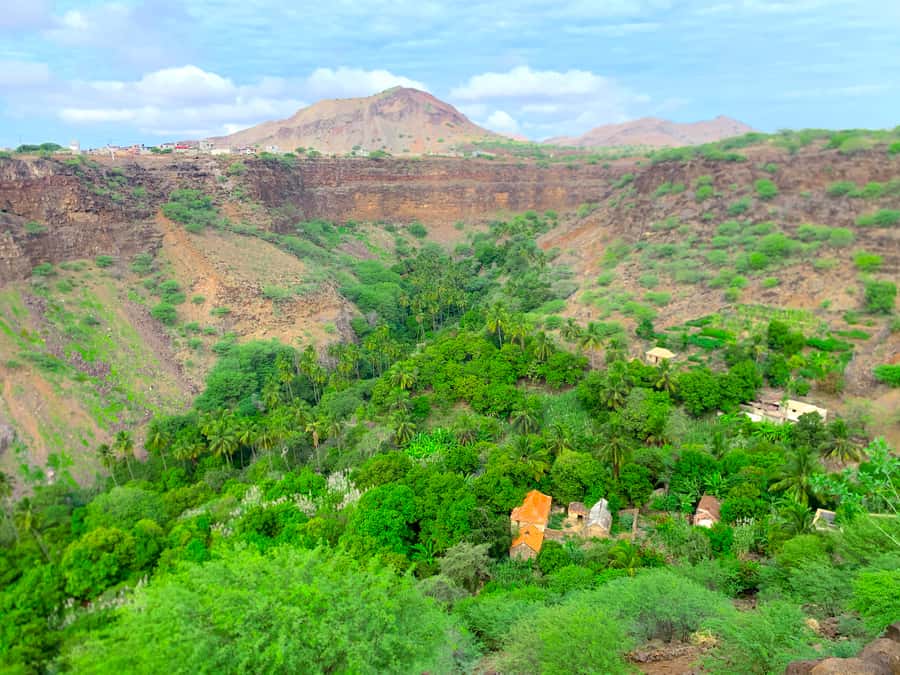
- A downhill walk through a green oasis: The trail covers about 5 kilometers, with roughly 186 meters of descent.
- Baobabs and escape routes: The valley has trees linked with Charles Darwin and was once used by enslaved people attempting to escape.
- A local rum stop: You can see sugar cane farming and learn about small-scale rum production in a natural setting.
- Cidade Velha in one compact visit: The route includes Banana Street, São Francisco Convent, Nossa Senhora do Rosário church, the old slave market, cathedral ruins, and São Filipe Fortress.
- A good guide matters: English, French, Portuguese, and Spanish are available, with private and small-group choices.
- Plan for uneven walking: Wear proper shoes, carry water, and bring hiking trousers from August through November.
Why this Santiago day trip works so well

Santiago can feel like two islands stitched together. Around Praia, you see the capital and its busy streets. In Calabaceira Valley, the setting changes quickly. The trail passes through thick plant growth, working farmland, and a cooler, more sheltered valley. Then Cidade Velha brings you back to the island’s hard history and old stone buildings.
That contrast gives this tour more substance than a simple sightseeing drive. You are not only looking at monuments. You are seeing how water, farming, trade, slavery, religion, and military power shaped Santiago.
The price is $82 per person. That includes hotel pickup and return in Praia, transport, a guide, and liability insurance. Lunch and the €5 entrance fee for São Filipe Fortress cost extra. I consider the price reasonable if you want transport and interpretation bundled together, especially because the valley and old city are much easier to combine with a local driver than on your own.
The four-hour schedule is the part I would treat carefully. The advertised plan is compact, and the trail data gives about two hours of actual walking. But the valley portion is also described as a three-hour trek, and one reported outing ran close to eight hours. Guides, group pace, weather, stops, and transport can affect the timing. I would not schedule a flight, ferry, or fixed dinner immediately afterward.
More cidade velha heritage tours in Praia:
- Praia & Cidade Velha: Guided City Tour
★ 4.8 · 80 reviews - From Praia: Cidade Velha, Tarrafal & East Side Island Tour
★ 4.8 · 23 reviews - Like Locals: Praia and Cidade Velha Tour + Local Pontxi Tasting
★ 5.0 · 19 reviews
From Praia to the top of Calabaceira Valley
Pickup is provided from your hotel in Praia. You are asked to wait in the lobby 10 minutes before the arranged time, and the driver carries a sign with your last name. The vehicle will wait no longer than five minutes after pickup time, so this is one moment when being early pays off.
The drive takes you toward the small village of Calabaceira. The hike begins at the upper end of the valley and follows a one-way route downhill. That direction matters. You gain only about 3 meters, but lose roughly 186 meters, finishing near the lower part of the valley at about 14 meters above sea level. The high point is listed at about 200 meters.
This is not a mountain climb, but downhill walking has its own demands. Narrow paths and loose or uneven sections can be harder than a level road, particularly for older people or anyone who feels unsteady on rocks. The tour is not suitable for people with mobility impairments.
The path is described as medium quality, narrow at the beginning, and safe. That is useful information, but I would still wear shoes with a firm sole. Sandals and smooth-soled trainers are a poor match for a sloping trail. Hiking trousers are strongly advised from August through November, when vegetation may brush against your legs.
Walking through the Green Valley

The best part of the walk is the change in scenery. Calabaceira Valley carries far more plant life than you might expect from Santiago’s generally dry appearance. You pass sugar cane, mango trees, cassava, bananas, and other crops tended by local farmers.
This is working countryside, not a landscaped park. Your guide can help connect the plants to daily life on the island. The fields show how local agriculture uses pockets of water and fertile ground, while the valley’s vegetation provides shade and habitat for birds and other animals.
The baobab trees add another layer. They are specifically linked with Charles Darwin, giving the walk a small natural-history connection as well as a visual one. You may also see kingfishers and monkeys. These sightings are not guaranteed, but they explain why it is worth moving at a steady pace rather than rushing from one stop to the next.
The valley also carries a painful human story. Its paths were used as escape routes by enslaved people during the period of slavery. That detail changes the way you see the trail. It is not only a pleasant walk through trees. It was once part of a dangerous network of movement and survival.
I would ask your guide to explain how the valley connected farms, settlements, and the coast. The quality of the visit depends partly on those local explanations. Recent guide names associated with especially strong outings include Mario, Katia, Ivana, Soraya, and Riccardo, but the assigned guide can vary.
Seeing rum production beside the fields
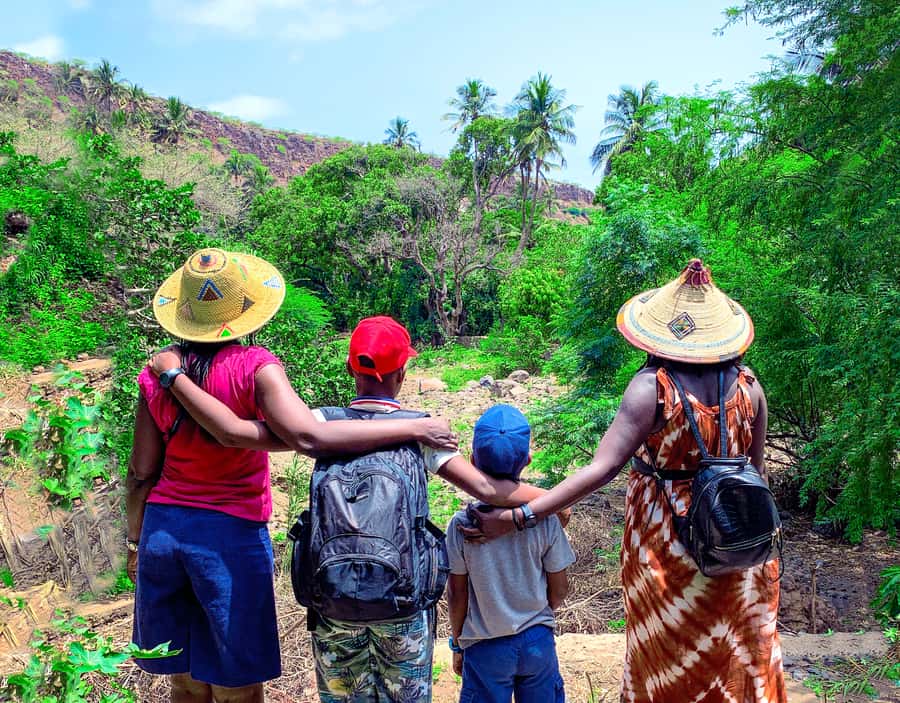
A local rum distillery sits in the valley area, and the visit gives you a close look at one of Santiago’s traditional products. The stop connects directly to the sugar cane fields you have just passed, making the process easier to understand than a stand-alone tasting room would be.
You can meet local farmers and see the agricultural setting where cane, fruit, cassava, and bananas are grown. The appeal is less about a polished factory tour and more about seeing production tied to local land and local work.
The supplied details do not promise a tasting, a full production demonstration, or a meal at the distillery, so I would not book this expecting a large commercial rum attraction. Think of it as a short cultural stop during the walk. If you are interested in food and drink traditions, it adds useful context. If your priority is a long hike with no interruptions, the stop may slow your pace.
A few more Praia trips to weigh up
- Serra Malagueta: Principal Valley Hike & Lunch with Locals
★ 4.7 · 64 reviews - Praia: Baobab Mysterious Tree, Green Valley & Old City Hike
★ 4.8 · 53 reviews - Santiago: Monte Tchota Natural Park to Pico d’Antónia Hike
★ 4.8 · 43 reviews - Serra Malagueta Natural Park Hike & Relaxing Swim at Tarrafal Beach
★ 5.0 · 30 reviews
Entering Cidade Velha, Santiago’s old capital
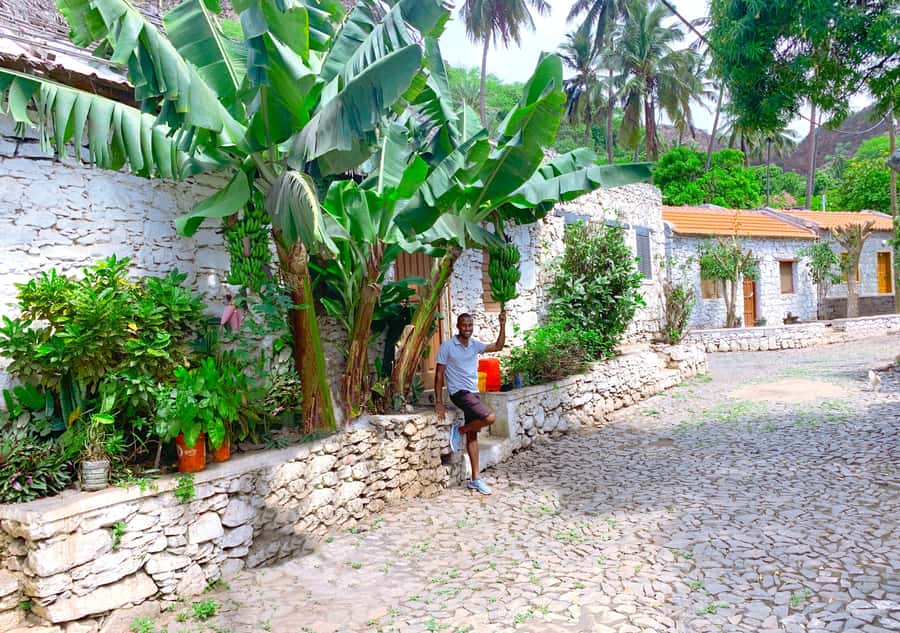
After the valley, the tour moves to Cidade Velha. The town is a UNESCO World Heritage Site and is described as the first city built by Europeans in sub-Saharan Africa. Its importance comes from its role as an early Atlantic settlement and a center tied to trade, colonization, religion, slavery, and defense.
The tour covers several key sites, but the order may vary. You begin with places such as São Francisco Convent, Banana Street, and Nossa Senhora do Rosário church.
Banana Street is one of the old town’s most distinctive places. Its name sounds light, but the street belongs to a much larger story about early settlement and trade. The convent and church help show how religious institutions shaped the town. Nossa Senhora do Rosário is especially important as one of the historic churches in the old city.
Cidade Velha is not a single grand monument surrounded by perfect paving. You see ruins, streets, surviving buildings, and wide views that require some imagination. This is where a good local guide earns the fee. Names, dates, and political events mean more when you can connect them to the stones in front of you.
Lunch by the sea in a typical restaurant
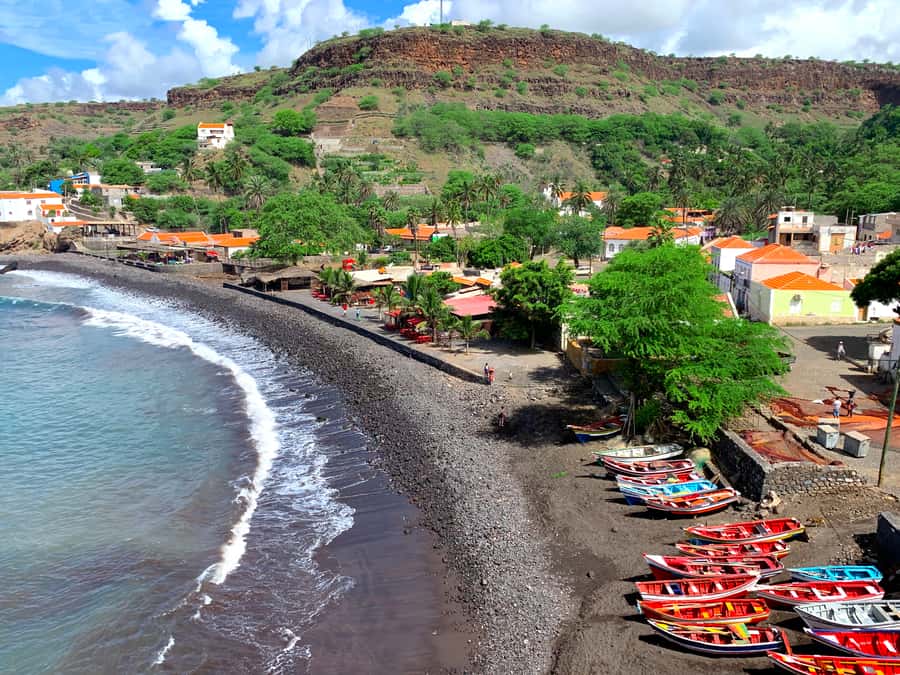
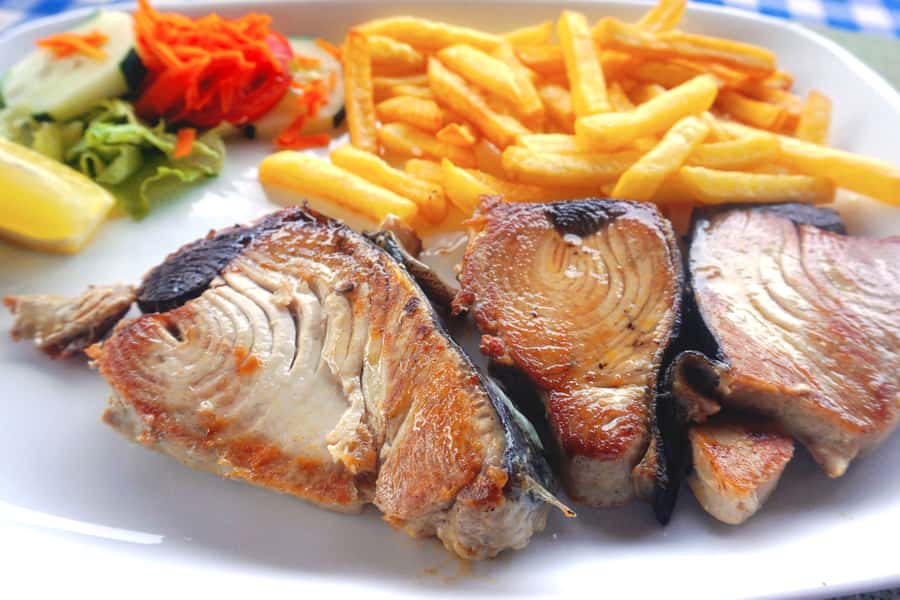
The schedule includes a lunch break at a typical restaurant on the seafront, but lunch is not part of the $82 price. Bring money for the meal and confirm the day’s arrangement with your guide.
This pause is useful after the downhill walk. It gives you time to rest before the afternoon monuments, and local food is part of understanding Santiago. The exact dishes and cost are not specified, so I would avoid assuming that a particular menu or dietary option is available.
The waterfront setting also gives you a change of pace. The morning is mainly about walking and farmland. Lunch lets you sit, look out toward the coast, and prepare for the more concentrated history portion of the tour.
The slave market and the difficult story of Cidade Velha
The former slave market is one of the most important stops. It is also the point where the tour becomes especially serious. Cidade Velha’s history cannot be separated from the Atlantic slave trade, and a visit here should be approached with respect rather than as a quick photo stop.
Your guide can place the market within the town’s wider role in colonial trade. The value of the visit is not simply seeing an old structure. It is understanding how people were treated as property, how the town’s economy was connected to forced migration, and how that past shaped the region.
The ruins of Sé Catedral add another reminder of the city’s former importance. The cathedral is no longer intact, but the remaining stonework helps you picture a much larger religious and political center than the present-day ruins might suggest.
I appreciate that this tour puts the slave market alongside churches, the convent, and the fortress. That combination avoids presenting Cidade Velha as only a picturesque old town. You get a fuller, more honest account of power, belief, commerce, and violence.
The climb to São Filipe Fortress
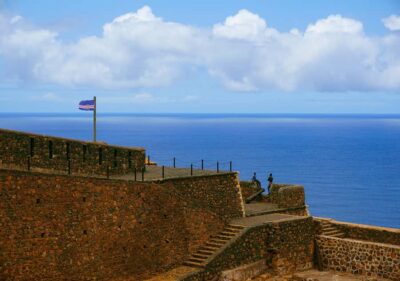
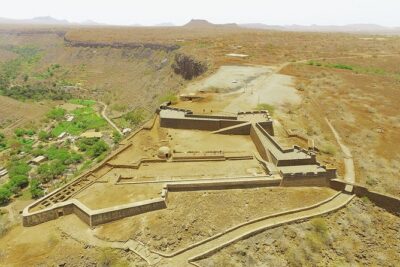
The final major stop is the Royal Fortress of São Filipe. It sits above the town and gives you a broad view over Cidade Velha. From here, the old settlement’s position becomes clear, as does its exposure to attack from the sea.
The fortress explains the defensive system used against pirates. Its high position was practical, not decorative. You can look down over the town and understand why control of the ridge mattered.
There is a separate €5 entrance fee, so carry cash in euros. The climb and fortress visit add more walking after the valley descent, though the supplied information does not give a separate distance or surface description for this section. If your legs are tired, tell the guide early and pace yourself.
This is also the point where the tour’s timing can stretch. A group that stops often, walks slowly, or spends longer at the old city may need more than the planned four hours. I would view the schedule as an estimate rather than a hard guarantee.
How easy is the hike really?
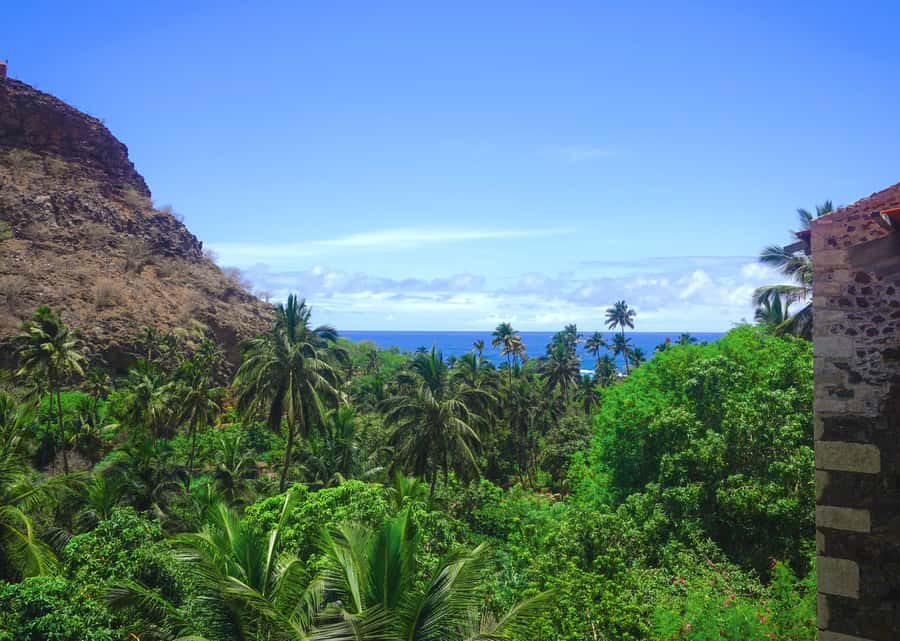
The route is labeled easy, and the elevation gain is minimal. For a reasonably fit person who is comfortable walking downhill on a narrow trail, it should be manageable. The total trail distance is about 5 kilometers, with roughly two hours of walking listed in the practical trail information.
Still, easy does not mean flat, paved, or suitable for everyone. The beginning is narrow, the path slopes downhill, and boulders may appear on steeper sections. One outing included older participants who found the descent much harder than the description suggested.
I would choose this tour if you can walk for two to three hours on uneven ground without assistance. I would reconsider it if you have knee problems, balance concerns, or limited mobility. Bring water, a hat, sunscreen, and solid footwear. From August through November, hiking trousers are a smart choice.
Shared group or private tour?
You can choose a shared group or private outing. The shared option requires at least two participants. If that minimum is not met, the provider may offer another date, charge an extra fee to run the tour privately, or cancel with a full refund.
A small group can be good value and may make the town visit more lively. The tradeoff is pace. A downhill trail that feels simple alone can take much longer when everyone walks at a different speed.
A private tour costs more if a supplement is required, but it gives you more control over stops and questions. I would favor private service for older family groups, photographers, or anyone who wants extra time at the fortress and historic sites.
Guides can operate in English, French, Portuguese, or Spanish. If historical explanation is important to you, select the language in which you will be most comfortable asking questions.
What the $82 price really covers
At $82, you are paying for more than admission to a few sites. Hotel pickup and return from Praia remove the need to arrange a separate driver. Transport also lets you combine a rural valley, a distillery, and Cidade Velha in one half-day plan.
The guide is the other major part of the value. Without local interpretation, Calabaceira could be only a pleasant green walk, and Cidade Velha could become a collection of ruins. Strong guides such as Mario, Katia, Ivana, Soraya, and Riccardo have been described as friendly, informative, and ready for questions.
The exclusions are simple but important. Lunch is extra, and São Filipe Fortress costs €5. Add those costs before comparing this with a private car and independent visits.
Free cancellation up to 24 hours before departure and reserve-now, pay-later booking make the plan easier to adjust. Those policies matter most if your Praia schedule may change.
Who should book this Santiago excursion?
I would choose this tour if you want a compact introduction to Santiago that mixes outdoor scenery with major cultural sites. It suits people who enjoy seeing farms, plants, and wildlife but also want the difficult history explained properly.
It is especially useful for a first visit to Santiago, since the route covers several different sides of the island. You get rural Calabaceira, local rum production, the old streets of Cidade Velha, the slave market, religious ruins, and a fortress view.
I would hesitate if you want a long, quiet nature walk with no historical stops. I would also avoid it if you cannot manage a sloping, uneven trail. The tour works best for flexible schedules, since the stated four hours may not hold exactly.
FAQ
Where does the tour begin and end?
Pickup and drop-off are provided at your hotel in Praia.
How long is the activity?
The advertised duration is four hours. The valley portion is described as a three-hour trek, while the trail information lists about two hours of walking.
How far is the trail?
The trail distance is approximately 5 kilometers.
Is the hike difficult?
It is rated easy, with about 3 meters of elevation gain and roughly 186 meters of elevation loss. The path is narrow at the beginning and may include sloping or bouldered sections.
Is the route suitable for people with mobility impairments?
No. The activity is not suitable for people with mobility impairments.
What should I wear and bring?
Wear decent walking shoes and hiking trousers, especially from August through November. Bring a hat, sunscreen, water, and €5 for São Filipe Fortress.
Is lunch included?
No. Lunch is not included. The tour provides a break at a typical seafront restaurant.
What languages are available?
Live guides are available in English, French, Portuguese, and Spanish.
Is the São Filipe Fortress entrance included?
No. The entrance fee is €5.
Can I book a private tour?
Yes. Private and small-group options are available. The shared group option requires at least two participants.
Should you book it?
Book this tour if you want Santiago’s best contrast in one outing: a green valley walk followed by the serious, essential history of Cidade Velha. The local farming, baobabs, possible kingfishers and monkeys, rum stop, slave market, and fortress view give the day real variety.
Just take the hiking description seriously. This is an easy route only for people comfortable with downhill walking on an uneven path, and the schedule may run long. With good shoes, water, an open timetable, and a guide who explains the island well, the $82 price offers a useful and memorable introduction to Santiago.
Just added around Praia
- Hiking Águas Belas Cave★ 4.5 · 3 reviews
- Tour Old City/Discover Old Town★ 4.0 · 8 reviews
- Santiago Island: 4-Hour Calabaceira Valley Hike & Guided Tour to Cidade Velha★ 5.0 · 18 reviews
- Tarrafal Beach Tour: Boat Trip to the Lighthouse, Snorkel & BBQ Lunch★ 5.0 · 5 reviews
- Santiago Island: Private Airport Transfer to Praia or Vice Versa★ 5.0 · 3 reviews
- Best of Santiago Island: Cidade Velha, Workshop & Tarrafal Beach Tour★ 4.5 · 3 reviews
- Santiago Island: Banana Plantation, Natural Park & Workshop with a local family★ 5.0 · 10 reviews
- Private Tour of Santiago – Discover the Island★ 4.5 · 18 reviews
Cidade Velha Heritage Tours, compared.

Like Locals: Praia and Cidade Velha Tour + Local Pontxi Tasting
Read our review →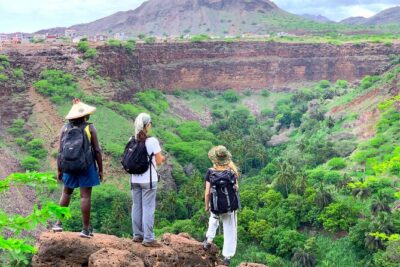
4-Hour Calabaceira Valley Hike & Guided Tour to Cidade Velha
Read our review →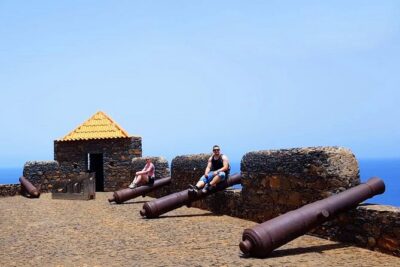
Best of Praia & Cidade Velha Tour, a World Heritage Site
Read our review →
Guided City tour Praia with Cidade Velha (World Heritage)
Read our review →
Shore Excursion: 3-Hour Guided Historic Tour of Praia & Cidade Velha
Read our review →Browse the lists this tour appears in