
Reviewed · CAPE VERDE LOCAL FAMILY LUNCHES
Santiago Island: Banana Plantation, Natural Park & Workshop with a local family
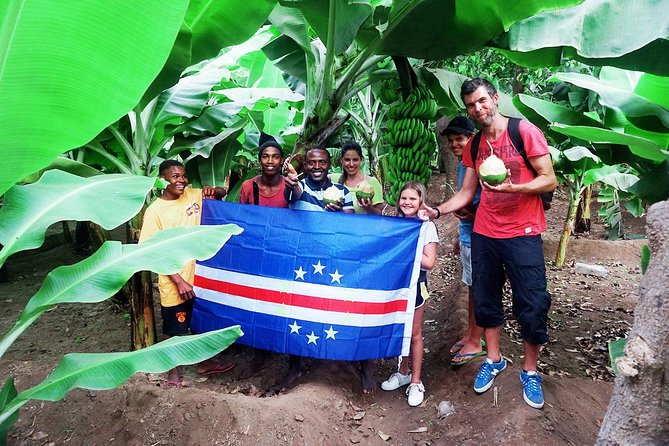
Santiago’s best stories are often found away from Praia’s streets. This half-day trip takes you into the island’s farming country, where you walk beneath banana plants, learn about local fruit, and then cook with a Cape Verdean family in São Lourenço dos Órgãos. The food workshop with Mama Luisa is the heart of the experience.
I like the small group limit of eight, which gives you a better chance to ask questions and get help during the cooking. I also like the simple route: a plantation walk followed by a family meal lesson. You see where food grows, then learn how it reaches the kitchen. The main consideration is time. Four hours goes quickly, and the plantation visit is a walking tour rather than a long nature hike.
In This Review
- Key points to know before booking
- From Praia to the farming country of Santiago
- Walking beneath the bananas in Pedra Badejo
- Cooking cuscuz and fidjós with a local family
- Why the small group matters
- The return through rocks and valleys
- What the $87.14 price gets you
- Who will enjoy this Santiago Island outing
- Practical booking advice for Praia
- Should you book the plantation and family workshop?
- FAQ
- Where does the tour start?
- How long does the experience last?
- How many people can join the standard tour?
- What happens at the banana plantation?
- Is coconut water included?
- What food do you prepare with the family?
- Can I cancel for a full refund?
Key points to know before booking
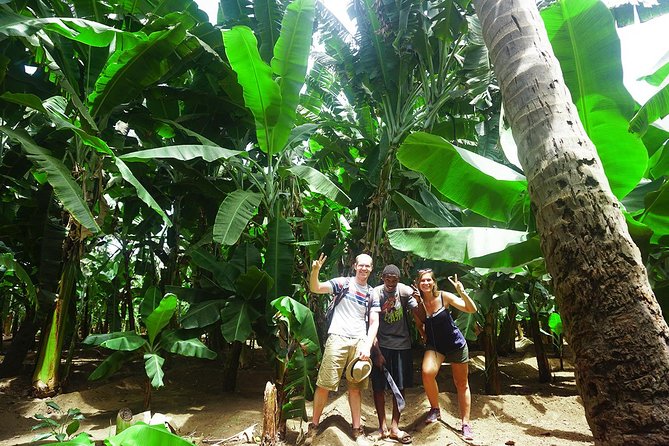
- Walk through Cape Verde’s largest banana and coconut plantation in Pedra Badejo, with explanations about the island’s fruit and plants.
- Cook cuscuz and fidjós from scratch with a local family in São Lourenço dos Órgãos.
- Ride from Praia and back with hotel pickup and drop-off included.
- Expect a personal small-group outing, capped at eight people.
- Ask about language needs when booking, since Katia has led the tour in Spanish and other guides have included Ricardo, Ayrton, and Cleber.
- Bring water, sunscreen, a hat, and comfortable clothing, especially for the outdoor plantation walk.
From Praia to the farming country of Santiago
Your morning begins with a 9:00 am pickup at your Praia accommodation. The drive inland toward Santa Cruz takes about 30 minutes, shifting the focus from the capital to the agricultural side of Santiago Island.
That transfer matters because this experience is not just a set of stops. The road connects two kinds of local life: working farmland and home cooking. You are not spending the morning inside a museum or moving from one photo stop to another. You are heading toward places where crops and family recipes still shape the day.
The vehicle ride is also useful for anyone staying in Praia without a rental car. Round-trip transport removes the need to plan a separate route to Pedra Badejo and São Lourenço dos Órgãos. Since the outing lasts about four hours, you can fit it into a morning without giving up a full day in the capital.
The tradeoff is that the schedule is fairly tight. The drive takes roughly an hour in total, leaving about three hours for the plantation and workshop. I would choose this tour for a focused introduction to Santiago’s food and rural culture, not for a slow, unplanned day in the countryside.
More Cape Verde Local Family Lunches in Santiago Island
- Serra Malagueta: Principal Valley Hike & Lunch with Locals
★ 4.7 · 64 reviews - Praia: Guided Historic Walking Tour & Lunch with Locals
★ 3.8 · 9 reviews - Praia: Guided Historic Walking Tour & Lunch with Locals
★ 4.5 · 8 reviews
Walking beneath the bananas in Pedra Badejo
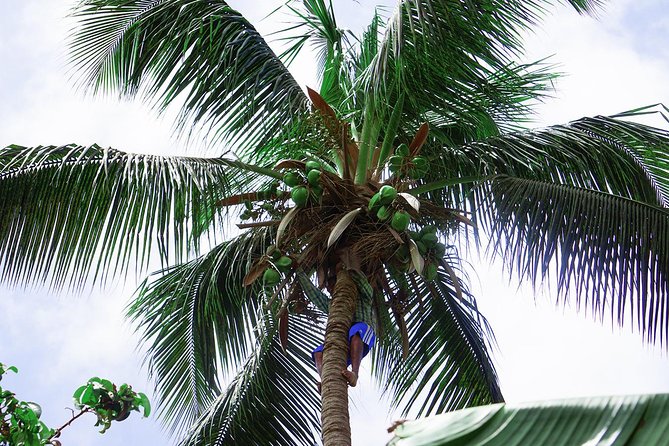
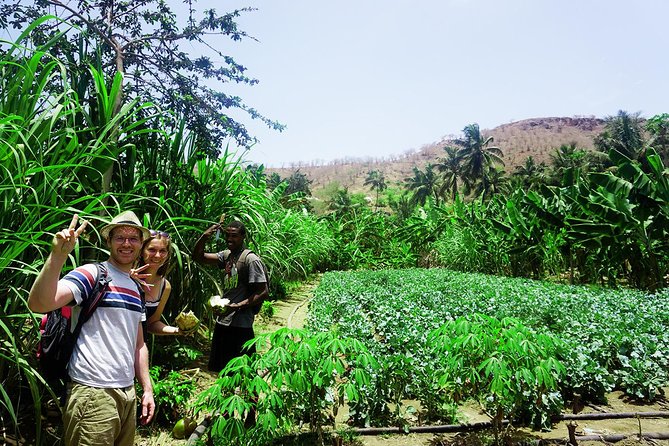
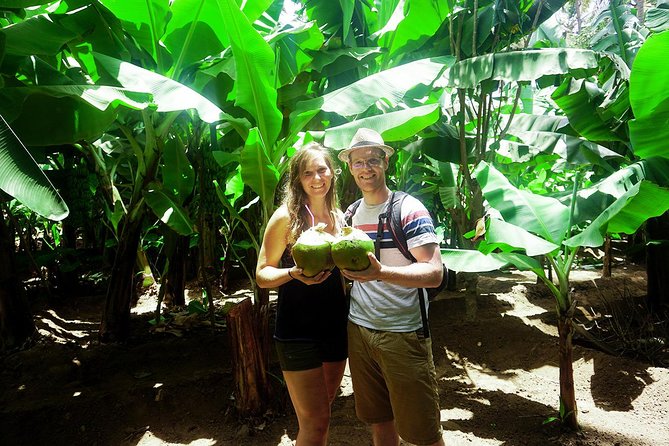
At Pedra Badejo, you enter the country’s largest banana and coconut plantation. The walk lasts about an hour and follows agricultural fields where your guide explains the fruits and plants growing along the route.
This is the kind of stop that rewards curiosity. Instead of simply looking at rows of crops, you can ask how different fruits fit into island life and how the plants are used. The plantation gives the tour a strong sense of place: you are learning about Cape Verdean food in the setting where some of it begins.
The banana plants also provide shade in parts of the walk. One review described the stroll as pleasantly cool beneath the plantation canopy, which is useful context for anyone concerned about the heat. Still, you should wear comfortable clothes and bring water, a hat, and sunscreen. Shade does not cover every part of an outdoor agricultural visit.
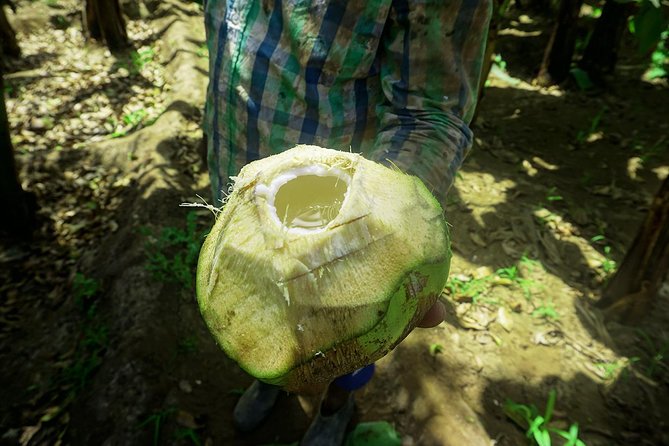
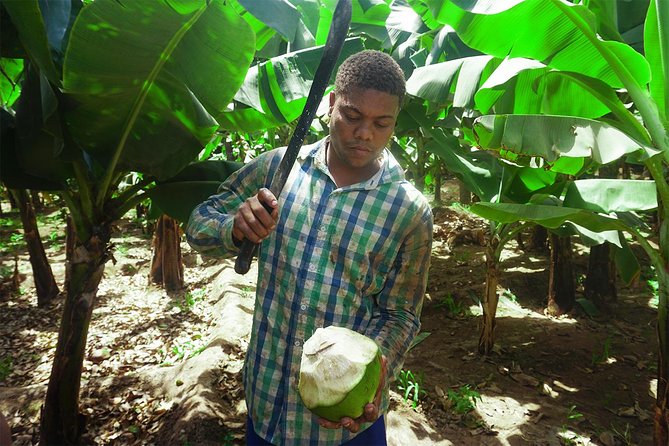
If fresh coconuts are available, you can buy coconut water at your own expense. This is a small extra, not something included in the tour price, so carry some cash if you want the option. It can make a welcome refreshment after walking, but do not count on it as part of the included service.
The plantation stop is best for people who enjoy seeing ordinary working places. It is less suitable if you want dramatic scenery, long forest trails, or a demanding hike. The appeal comes from the crops, the guide’s explanations, and the connection between farming and food.
Cooking cuscuz and fidjós with a local family
The most distinctive part of the morning takes place in São Lourenço dos Órgãos, also called Orgãos in the route description. Here, you visit a local family and learn to prepare two traditional foods: cuscuz and fidjós.
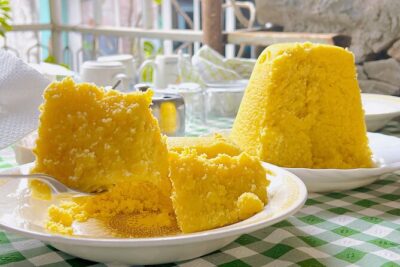
Cape Verdean cuscuz is a traditional cake made from corn flour. Fidjós are fried banana mixed with wheat. The recipes are modest, practical foods, which is exactly why this workshop works well. You are not watching a polished restaurant demonstration. You are learning about dishes that belong to home cooking and local routine.
The cooking session lasts about two hours, so it receives more attention than the plantation walk. You have time to see the ingredients, follow the preparation, and take part in making the food. If you are not confident in the kitchen, the small group should make it easier to ask for help without feeling rushed.
The family setting is important. A meal lesson in someone’s home offers a more direct connection to Cape Verdean customs than a standard tasting stop. You get a chance to ask about the dishes and the way they fit into local life. The experience is cultural as much as culinary.
The local family associated with the workshop is referred to as Mama Luisa in the tour feedback. Guides named in connection with the experience include Ayrton, Cleber, Ricardo, and Katia. Katia has led the tour in Spanish, which may be useful if you prefer that language. Guide assignments can vary, so treat those names as examples rather than a guarantee for your date.
Keep your expectations practical. The information provided does not promise a full sit-down meal, a recipe booklet, or a market visit. The clear focus is hands-on preparation of cuscuz and fidjós with the family. If you want to learn a few local dishes and share a cultural exchange, that focus is a strength.
Why the small group matters
The tour accepts no more than eight people. That limit is one of its most useful features, especially during the workshop.
In a large group, a home cooking lesson can become hard to follow. You may stand at the back, miss instructions, or have little chance to take part. With eight or fewer, you should have more room to watch the preparation and ask questions. A guide can also spend more time explaining unfamiliar plants at the plantation.
The small format does not turn the outing into a fully private experience. Other people may still join your group. If you want a trip built entirely around your schedule, the private-tour upgrade is the better choice. The standard small-group option should suit most people who want personal attention without paying for a fully exclusive outing.
The guided element also helps with the cultural side. You are not left to guess what you are seeing in the fields or how the dishes relate to Cape Verdean life. The strongest feedback about the tour has focused on friendly, attentive guides and the quality of the exchange at the family home. That makes the guide more than a driver between stops.
More cape verde local family lunches in Praia:
- Santiago Island Tour: Meet with a Local Family & Tarrafal Beach
★ 5.0 · 127 reviews - Sal Island: Catxupa Cooking Class with a local family
★ 4.7 · 72 reviews - From Tarrafal: Serra to Principal Hike & Lunch with locals
★ 4.7 · 41 reviews - From Tarrafal: Verdant Valley Hike & Lunch With Locals
★ 4.9 · 17 reviews
The return through rocks and valleys
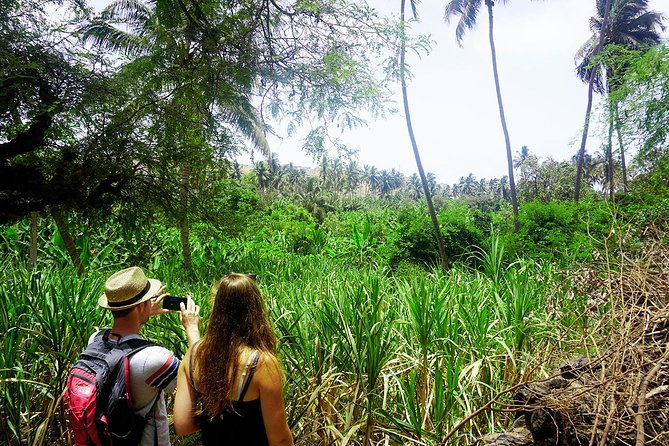
After the cooking workshop, you return to Praia by road, passing between rocks and valleys on the way back. The final drive lasts about 30 minutes, followed by drop-off at your accommodation.
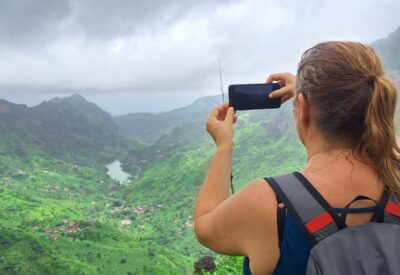
This return section is not presented as a separate sightseeing stop, so I would not book the tour expecting a guided geology walk or a formal viewpoint. Its value is visual and transitional. You get a short look at the island’s changing terrain before the morning ends.
Because the tour returns to Praia, it works well for a free afternoon. You might use the remaining day for the capital, another meal, or a quieter rest after the early start. The 9:00 am departure and four-hour length make the timing easy to combine with other plans, though you should leave some flexibility in case road or group timing changes.
What the $87.14 price gets you
At $87.14 per person, this is not the cheapest way to spend four hours in Santiago. Its value depends on what you want included in that price.
You are paying for round-trip transport from Praia, a guided plantation visit, and a two-hour cooking workshop with a local family. You also get the convenience of one organized route linking Pedra Badejo with São Lourenço dos Órgãos. For someone without a car, that combination can be more useful than arranging separate transport and trying to find the plantation and family workshop independently.
The price makes less sense if your main goal is simply to see farmland from a vehicle or take a short walk. The plantation entry itself has no separate admission charge, and coconut water, when available, costs extra. The real value lies in the transport, guidance, small group, and access to a family-based food experience.
Group discounts may help if you are booking with several people. A private upgrade is available for those who value control over the pace and want more direct attention. I would compare the standard rate with the private option based on your group size, rather than assuming private is always better.
The tour is often booked about 11 days ahead. That suggests you should not leave it until the last morning if the family workshop is a priority, especially if your dates in Praia are limited.
Who will enjoy this Santiago Island outing
I would recommend this experience to you if you want to connect food with daily life. It gives you a clear picture of how agricultural land, local ingredients, and household cooking fit together.
It also suits people who prefer a short, structured cultural outing. You do not need to plan several rural stops or arrange your own driver. Pickup, the plantation visit, the workshop, and return are organized within a four-hour window.
Food lovers will get the most from the visit, even if you are not an experienced cook. The dishes are specific and traditional, and the lesson is hands-on rather than just a tasting. People interested in Cape Verdean culture should also appreciate the chance to learn in a family home.
The tour may be less suitable if you want a full-day exploration of Santiago Island. There is no long independent stop in Pedra Badejo, and the route does not include a separate extended visit to a natural park. The outdoor walk is about an hour, while the workshop takes up the largest share of the morning.
It is also worth thinking about the walking conditions. Most people can participate, but the tour requires time outdoors in agricultural fields. Comfortable clothes, water, a hat, and sunscreen are sensible choices.
Practical booking advice for Praia
The tour starts at 9:00 am and pickup is offered from Praia hotels or accommodation. Make sure your pickup details are clear at booking so the morning begins without confusion.
Confirmation is provided when you book. The experience has free cancellation if you cancel at least 24 hours before the local start time. Changes or cancellations made within 24 hours are not accepted for a refund, and the experience needs a minimum number of people to operate. If the operator cancels because that minimum is not reached, you are offered another date or experience, or a full refund.
You can use a mobile ticket, which keeps the booking simple while you are in Cape Verde. Group discounts are available, and a private version can be selected if you want a more individual outing.
Language may be worth checking ahead of time. Katia has conducted the tour in Spanish, while the named guides include several members of the local team. If language is important to your enjoyment, ask which guide is scheduled for your date.
Should you book the plantation and family workshop?
Book it if you want a compact, personal look at Santiago’s food culture rather than a list of scenic stops. The banana and coconut plantation gives you the agricultural setting, and the cooking session with Mama Luisa’s family brings that knowledge into the kitchen.
The strongest reasons to choose it are the eight-person limit, the included Praia transfers, the two-hour workshop, and the chance to make cuscuz and fidjós yourself. The friendly guide style, including the Spanish-language option associated with Katia, adds practical appeal.
Skip it if your priority is a longer nature walk, dramatic outdoor touring, or a full-day island circuit. The plantation visit is brief, and the natural scenery on the return drive is viewed from the road.
For most people with a free morning in Praia, I think the experience earns its price through access and context. You are not just seeing a banana plantation or eating a local snack. You are tracing the path from field to family kitchen, with a small group and a guide to explain what connects the two.
FAQ
Where does the tour start?
The tour starts with pickup from your accommodation in Praia at 9:00 am.
How long does the experience last?
The tour lasts approximately four hours, including the drives between Praia, the plantation, the family home, and Praia again.
How many people can join the standard tour?
The group has a maximum of eight people.
What happens at the banana plantation?
You walk through the banana and coconut plantation in Pedra Badejo while a local guide explains the varieties of fruits and plants along the route. The walk lasts about one hour.
Is coconut water included?
No. If fresh coconut water is available, you may buy it at your own expense.
What food do you prepare with the family?
You learn to prepare cuscuz, a traditional corn-flour cake, and fidjós, fried banana mixed with wheat.
Can I cancel for a full refund?
Yes. You can cancel at least 24 hours before the local start time for a full refund. Cancellations or changes made less than 24 hours before the start are not accepted for a refund.
More Workshops in Praia
- Best of Santiago Island: Cidade Velha, Workshop & Tarrafal Beach Tour
★ 4.5 · 3 reviews - From Praia: Banana Plantation Tour and Cuscuz Workshop
★ 4.8 · 75 reviews - Surf Lessons
★ 5.0 · 60 reviews - Sal: Surf Lesson
★ 4.7 · 48 reviews
Just added around Praia
- Hiking Águas Belas Cave★ 4.5 · 3 reviews
- Tour Old City/Discover Old Town★ 4.0 · 8 reviews
- Santiago Island: 4-Hour Calabaceira Valley Hike & Guided Tour to Cidade Velha★ 5.0 · 18 reviews
- Santiago Island: Private Airport Transfer to Praia or Vice Versa★ 5.0 · 3 reviews
- Tarrafal Beach Tour: Boat Trip to the Lighthouse, Snorkel & BBQ Lunch★ 5.0 · 5 reviews
- Best of Santiago Island: Cidade Velha, Workshop & Tarrafal Beach Tour★ 4.5 · 3 reviews
- Private Tour of Santiago – Discover the Island★ 4.5 · 18 reviews
- Ribeira da Barca: Boat Trip to the Cave, Snorkeling and BBQ on the beach★ 5.0 · 10 reviews
Cape Verde Local Family Lunches, compared.
Santiago Island Tour: Meet with a Local Family & Tarrafal Beach
Read our review →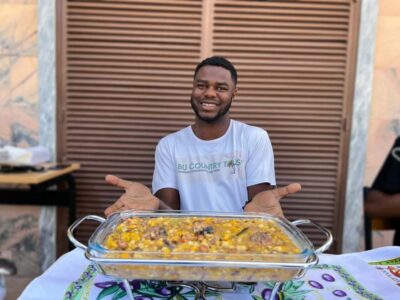
Serra Malagueta: Principal Valley Hike & Lunch with Locals
Read our review →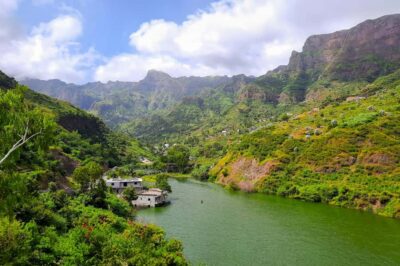

Small Group Island Tour & Lunch with a Local Family
Read our review →Browse the lists this tour appears in