
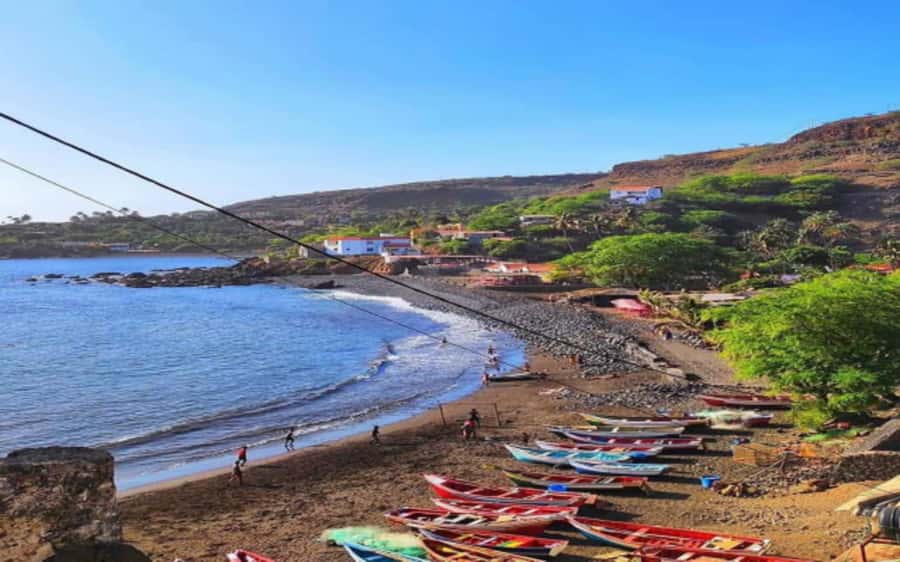
Reviewed · SANTIAGO ISLAND TOURS
The origen of Capeverdean People
Cidade Velha tells a complicated story: African peoples from Senegal, Guinea-Bissau, and Gambia were brought to Santiago during Portuguese colonial rule, and their lives helped shape the Cape Verdean nation. This Afro-centered tour puts that contribution at the front, rather than treating it as a footnote to European expansion. I like the focus on African roots and the compact two-hour format, which gives you a clear historical introduction without taking over your day.
I also like the practical setup. Hotel pickup and drop-off, a small group capped at seven, and guides in English, French, or Portuguese make this easy to fit into a Santiago itinerary. French-speaking guide Antonio received particular praise for his historical explanations, and one French-language visit also included attractive views around the island. The main consideration is time: two hours is enough for an introduction, but not a long, slow examination of every site in Cidade Velha.
In This Review
- Key points at a glance
- Why Cape Verdean origins are best understood in Cidade Velha
- The 20-minute ride from your hotel to the old city
- Walking through Cidade Velha’s African and European past
- How African influence appears in Cape Verdean culture
- What makes the guiding important
- The views add variety to a history-focused morning
- Is $64 a fair price for two hours?
- Who will get the most from this experience?
- Should you book The Origin of Cape Verdean People?
- FAQ
- Where does this tour take place?
- How long does the experience last?
- How much does the tour cost?
- Is hotel transportation included?
- How long is the drive to Cidade Velha?
- Which languages are available?
- How large is the group?
- What does the tour focus on?
- Can I cancel for a full refund?
Key points at a glance
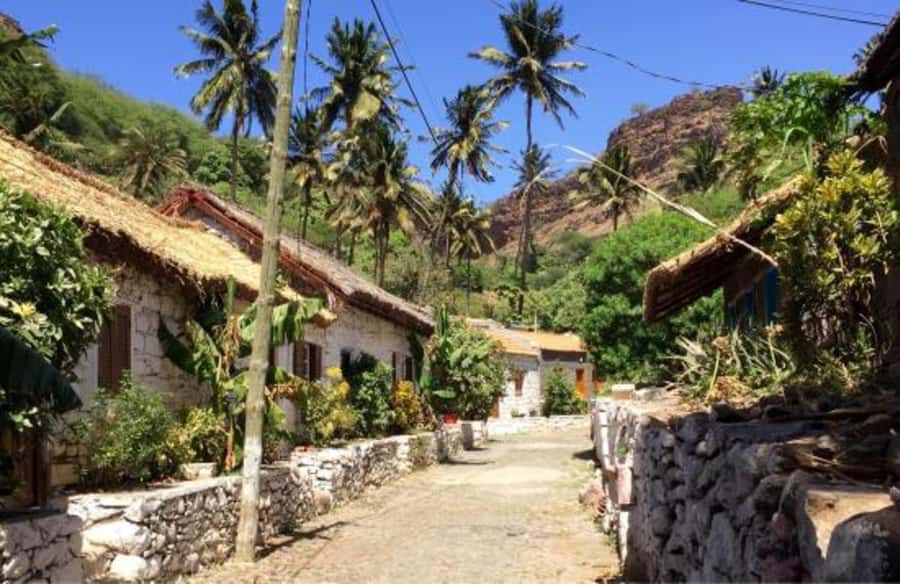
- African origins take center stage: Learn how people from Senegal, Guinea-Bissau, and Gambia helped form Cape Verdean society.
- Cidade Velha is the setting: Visit the old city founded through African and European contact and linked to the colonial slave trade.
- Culture is part of the story: The tour connects African influence with Cape Verdean skin colors, dance, customs, and Kriolu.
- Hotel pickup saves time: Transport from your accommodation takes about 20 minutes by car before the historic visit begins.
- Small groups keep it personal: The tour is limited to seven people, with live guiding in English, French, or Portuguese.
- A short, focused outing: The two-hour schedule works well when you want historical context without committing to a full-day tour.
Why Cape Verdean origins are best understood in Cidade Velha

This experience begins with a question many visitors do not fully consider: how did a Cape Verdean people and culture form on islands that had no large settled population before Portuguese colonial activity?
The tour’s answer places African men and women at the heart of the story. People were brought from parts of West Africa, including Senegal, Guinea-Bissau, and Gambia. Their work, families, beliefs, customs, music, movement, and languages helped create a new Kriolu nation.
That framing matters. Cape Verde’s history is often introduced through European navigation and colonial trade. Those subjects are important, but they can leave out the people whose lives made the society possible. Here, you are encouraged to look at Cape Verdean identity through African contributions, including culture, dance, skin colors, and the Kriolu dialect spoken today.
I find this especially useful if you have already seen a few colonial monuments but want to understand the people behind them. The tour is not just a walk through old stone buildings. It is an explanation of how contact, forced movement, and daily life shaped a society that became distinct from both Europe and mainland West Africa.
Other Praia days people book alongside this one:
- Santiago: Landscapes, Street Art, and Markets Day Trip
★ 4.8 · 316 reviews - From Port of Praia: Island Tour for Cruise Ship passengers
★ 4.5 · 190 reviews - Praia & Cidade Velha: Guided City Tour
★ 4.8 · 80 reviews
The 20-minute ride from your hotel to the old city
Your guide picks you up at your hotel and drives you for about 20 minutes to Cidade Velha on Santiago Island. That short transfer is more than a simple ride between two points. It gives the guide a chance to set up the subject before you reach the historic area.
Because the tour includes transport, you do not need to arrange a separate taxi or work out the route yourself. That is useful if your accommodation is outside the old city or if you are trying to fit this visit between other plans.
The group limit is seven people. That is a sensible size for a history tour, especially one dealing with sensitive subjects. You should have a better chance to hear the guide and ask a question than you would in a large coach group.
The exact starting times depend on availability, so check the schedule before booking. The stated duration is two hours, including the visit and the return to your accommodation. If you want a long stop for independent wandering, photography, or a detailed look at every surviving structure, this may feel quick.
Walking through Cidade Velha’s African and European past
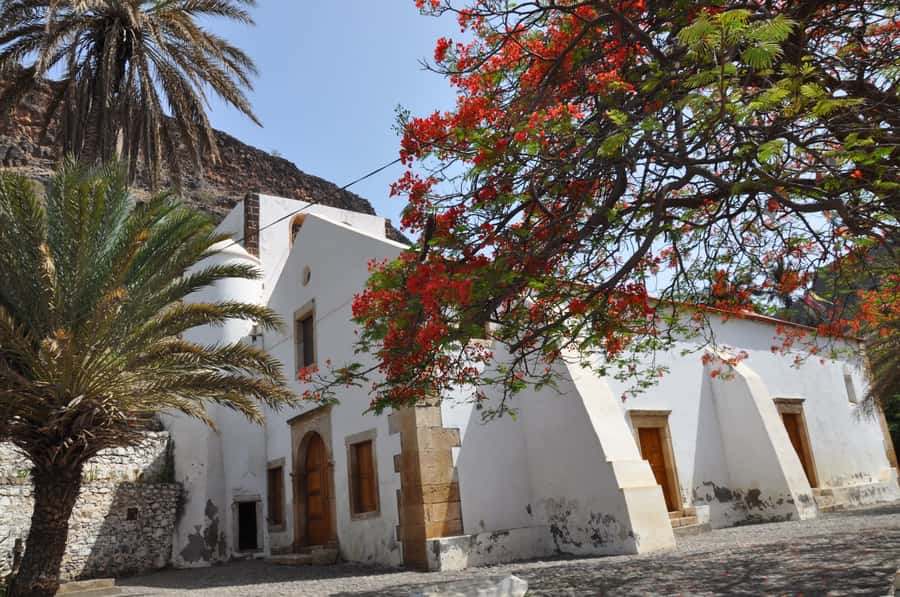
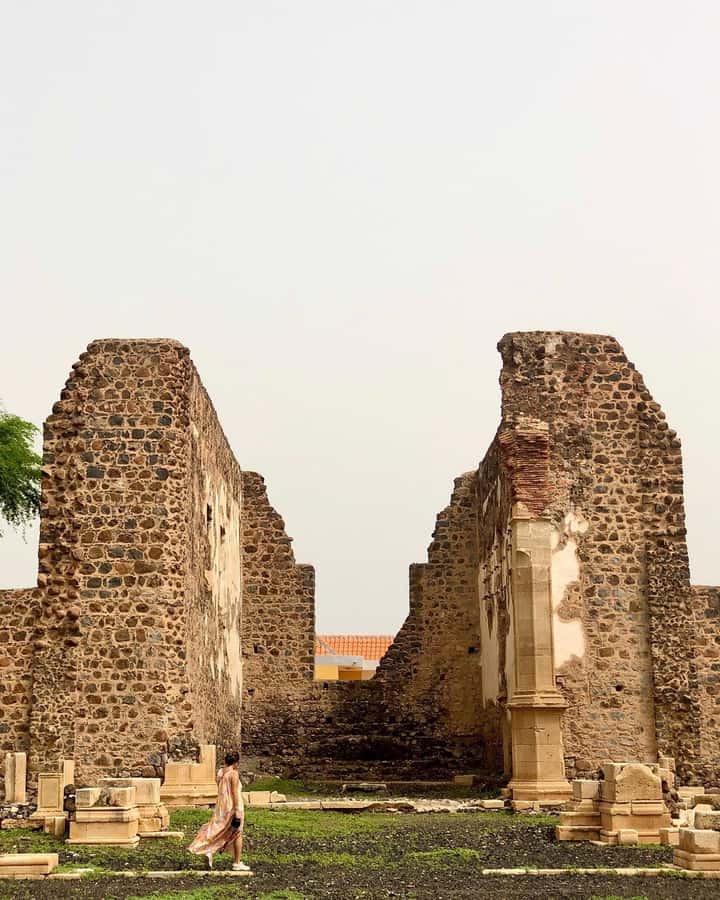
Cidade Velha is the historic center of the experience. It was founded through the meeting of African and European forces and is recognized as a World Heritage site because of its importance in the colonial slave trade and the expansion connected with the discovery of the New World.
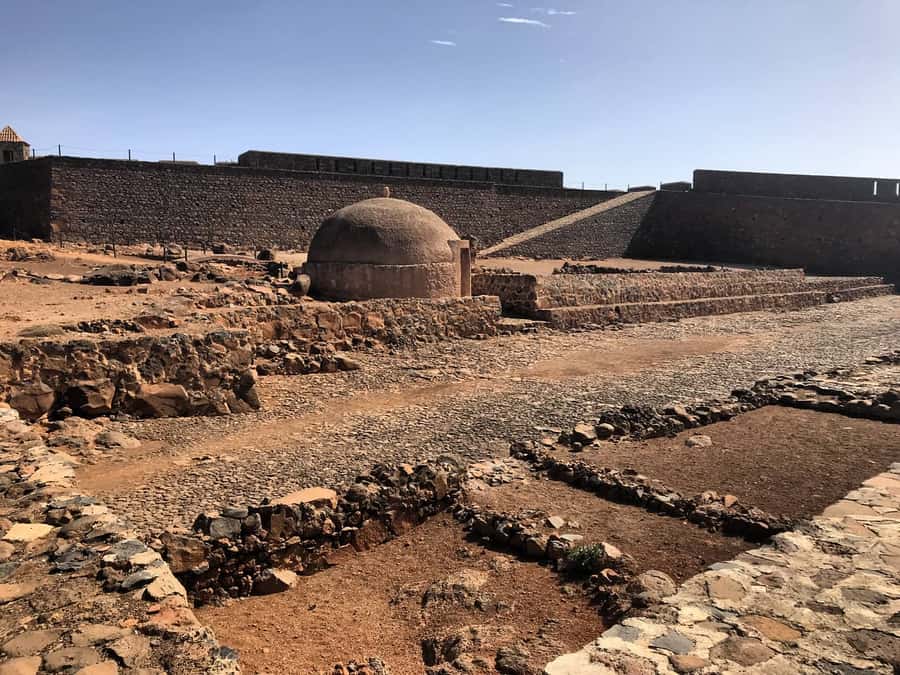
The tour takes you to the main historical monuments that remain from the old city. The supplied details do not name each monument, so you should expect a guided overview of the principal surviving sites rather than a promise of a specific list of buildings.
What gives the visit weight is the way the monuments are explained. A wall, square, or old structure is not presented only as an attractive relic. It is tied to the movement of African people, the colonial system, and the growth of a society that later became Cape Verde.
I like that the tour connects the physical remains to human contribution. You are asked to notice how African people shaped the nation, not simply how European authorities organized the town. That approach can change the way you read the old city. The stones provide evidence, but the guide supplies the human context.
The subject can also be difficult. Any visit connected to the slave trade should leave room for uncomfortable facts. The tour’s Afro-centered viewpoint is clear, so it suits you best if you want African contributions given strong emphasis rather than a neutral, evenly divided survey of every colonial power and institution.
How African influence appears in Cape Verdean culture
The tour goes beyond dates and monuments. It explains how African peoples influenced the culture you encounter in Cape Verde, including dance, skin colors, customs, and the Kriolu dialect.
That cultural link is one of the most useful parts for a first-time visitor. Without it, the history of population movement can remain abstract. With it, you begin to connect the past with Cape Verdean identity as it is expressed today.
The language point is especially important. The tour presents Kriolu as part of the result of contact between African and European communities. You will not receive a full language course in two hours, but you should come away with a clearer sense of why language is central to national identity.
The same goes for dance and other cultural traits. The purpose is not to claim that every custom comes from one source. Rather, the guide shows how African people helped shape the shared culture that developed on Santiago and across Cape Verde.
This makes the experience a good choice before spending more time in local communities. It gives you a framework for understanding cultural expressions instead of seeing them as performances separated from history.
Same archipelago, a completely different island day:
- Serra Malagueta: Principal Valley Hike & Lunch with Locals
★ 4.7 · 64 reviews - Praia: Baobab Mysterious Tree, Green Valley & Old City Hike
★ 4.8 · 53 reviews - Santiago: Calabaceira Valley Trek & Visit to Cidade Velha
★ 4.8 · 49 reviews - From Praia: Boat Trip, Snorkeling, Cave & BBQ on the Beach
★ 4.6 · 45 reviews
What makes the guiding important
The quality of this tour depends heavily on the guide. The experience is built around explanation, interpretation, and conversation, not a long list of attractions.
Guiding is available in Portuguese, English, and French. That range makes the tour accessible to many international visitors, and the small group size should help keep the narration direct rather than generic.
Antonio is specifically associated with a visit in Cidade Velha and is described as bringing a particular historical culture to the experience. If you are booking and can request a guide, it may be worth asking if Antonio is available, though the provided information does not guarantee that he will lead every departure.
French speakers have a useful reason to consider this tour. A French-language guide was praised for speaking very well and explaining the whole story of the Cape Verdean people clearly. A German-speaking participant also found the guide highly informed about Cape Verde and its history.
These points suggest that language ability and historical preparation are central strengths. Still, guide assignments can change. I would book this for its subject and structure first, then treat a particular guide request as a preference rather than a promise.
The views add variety to a history-focused morning
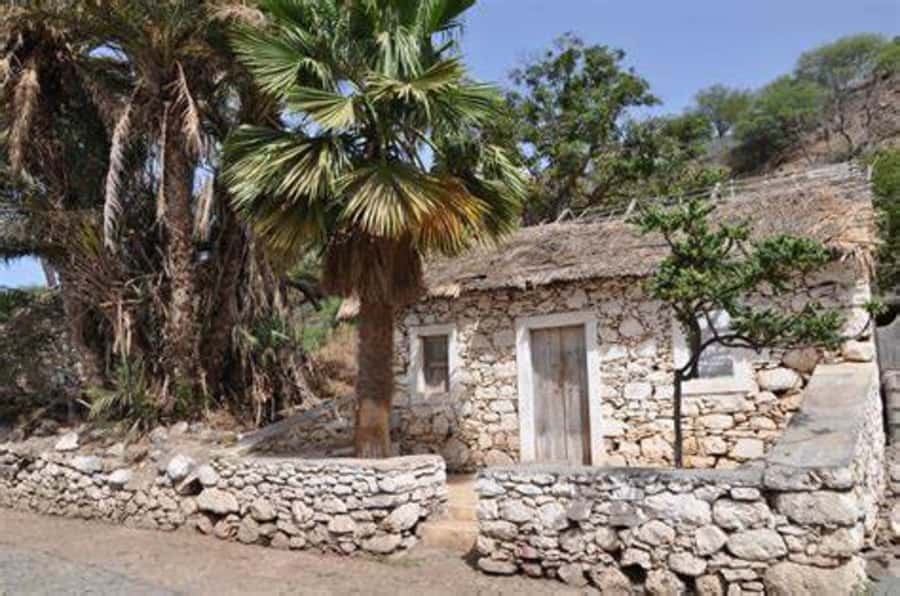
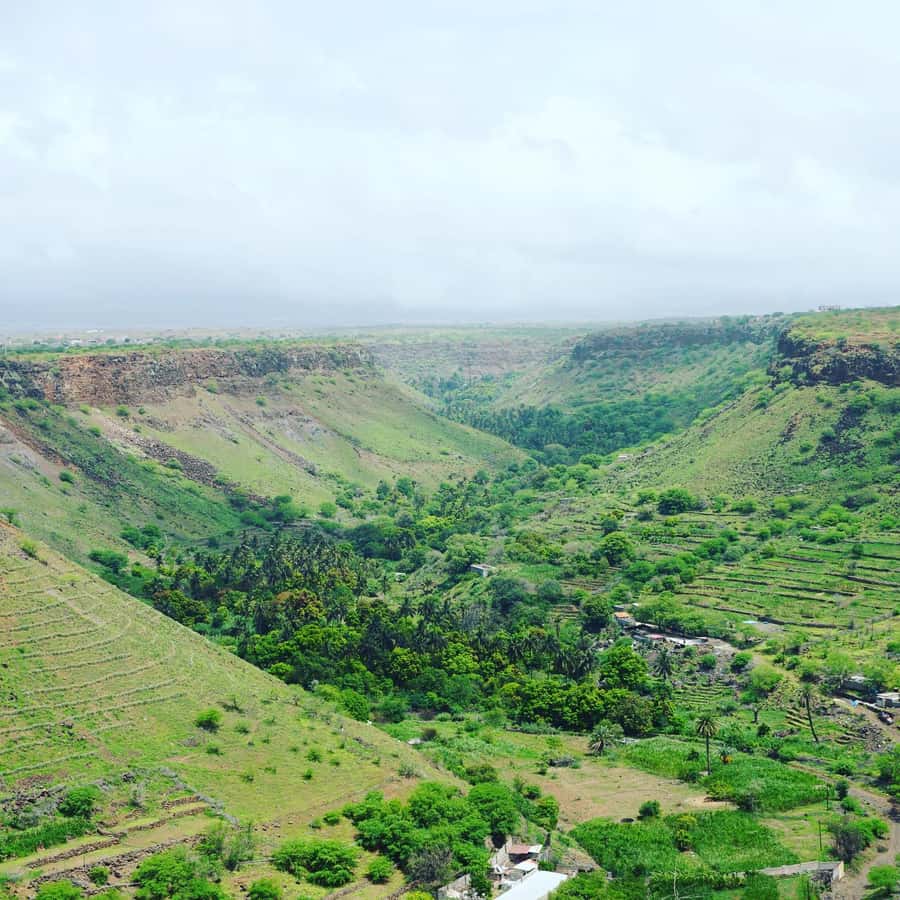
This is mainly a cultural and historical tour, but the route also includes views around the country. One French-language visit combined the historical explanation with attractive scenery.
That balance helps. Two hours spent only looking at monuments could feel dense, especially when the topic covers colonialism, forced migration, African identity, and the birth of a new nation. The scenery gives you a change of pace without pulling the focus away from the history.
Do not book this as a dedicated scenic excursion, though. The tour description gives no detailed viewpoint list or promise of extended photo stops. Think of the views as a welcome part of the drive and visit, not the main product.
Is $64 a fair price for two hours?

At $64 per person, the tour is not the cheapest way to reach Cidade Velha. The value comes from what is bundled into that price: hotel pickup, return transport, a live guide, and a small group limited to seven people.
If you only want to see the old city and walk around independently, you may prefer a less structured and less expensive plan. But independent sightseeing would not provide the same focused explanation of African origins, the slave trade, cultural formation, and Kriolu.
For a short first visit, the price is easier to justify because the tour handles the transport and supplies the historical thread. You are paying for interpretation as much as for the drive.
The two-hour length also affects value. It is efficient, but brief. You should see this as an introduction to Santiago’s African and colonial past, not a complete study of Cape Verdean history. If you want a full day of historic sites, museums, and extended conversations, you will need additional plans.
Who will get the most from this experience?
I would recommend this tour to you if you want to understand Cape Verde through its African roots. It is particularly useful for first-time visitors who are curious about how the country’s culture and Kriolu identity developed.
It also suits anyone with limited time on Santiago Island. The 20-minute transfer, two-hour format, and hotel return make it easy to add to a busy itinerary.
French, English, and Portuguese speakers have a clear advantage in choosing this experience because those are the available guide languages. The small group is another plus if you prefer the chance to ask questions.
You may want something else if your main goal is a relaxed scenic drive, a long independent visit, or a broad tour covering many periods of Cape Verdean history. The subject here is focused, and the Afro-centered viewpoint is intentional.
Booking is flexible: you can cancel up to 24 hours before the activity for a full refund, and you can reserve now and pay later. Those policies are useful if your Santiago schedule is still changing, but the more important decision is whether the tour’s historical focus matches your interests.
Should you book The Origin of Cape Verdean People?
Book it if you want Cidade Velha explained through the lives and influence of African people, not only through colonial architecture. The strong focus, small group, multilingual guiding, and included transport make $64 reasonable for a short introduction.
I would be especially inclined to book if you speak French and want a carefully explained visit, or if you have only a morning or afternoon available. Ask about Antonio when booking if his style sounds appealing, but do not assume a particular guide is guaranteed.
Skip it if you want a long, unhurried exploration or a tour built mainly around scenery. For everyone else, this is a focused way to place Cape Verdean identity at the center of your visit to Cidade Velha.
FAQ
Where does this tour take place?
The tour takes place on Santiago Island in Cape Verde, with the historic visit centered on Cidade Velha.
How long does the experience last?
The activity lasts two hours, including the guided visit and return to your accommodation.
How much does the tour cost?
The price is $64 per person.
Is hotel transportation included?
Yes. Hotel pickup, transport to Cidade Velha, and drop-off at your accommodation are included.
How long is the drive to Cidade Velha?
The drive from your hotel to the old city takes about 20 minutes by car.
Which languages are available?
The live tour guide can conduct the experience in Portuguese, English, or French.
How large is the group?
The tour is limited to seven participants.
What does the tour focus on?
It focuses on the African peoples who populated Santiago, their contribution to Cape Verdean culture, the development of Kriolu, and the historical monuments connected with Cidade Velha and the colonial slave trade.
Can I cancel for a full refund?
Yes. You can cancel up to 24 hours in advance for a full refund.
Just added around Praia
- Hiking Águas Belas Cave★ 4.5 · 3 reviews
- Tour Old City/Discover Old Town★ 4.0 · 8 reviews
- Santiago Island: 4-Hour Calabaceira Valley Hike & Guided Tour to Cidade Velha★ 5.0 · 18 reviews
- Tarrafal Beach Tour: Boat Trip to the Lighthouse, Snorkel & BBQ Lunch★ 5.0 · 5 reviews
- Santiago Island: Private Airport Transfer to Praia or Vice Versa★ 5.0 · 3 reviews
- Best of Santiago Island: Cidade Velha, Workshop & Tarrafal Beach Tour★ 4.5 · 3 reviews
- Private Tour of Santiago – Discover the Island★ 4.5 · 18 reviews
- Santiago Island: Banana Plantation, Natural Park & Workshop with a local family★ 5.0 · 10 reviews
Santiago Island Tours, compared.
Santiago Island Tour with Tastings and Tarrafal Beach
Read our review →
From Port of Praia: Island Tour for Cruise Ship passengers
Read our review →
Santiago Island Tour: Meet with a Local Family & Tarrafal Beach
Read our review →
Island tour with German-speaking guide for cruise guests
Read our review →
Browse the lists this tour appears in