
Reviewed · SAL ISLAND TOURS
Turtle Experience in Sal island
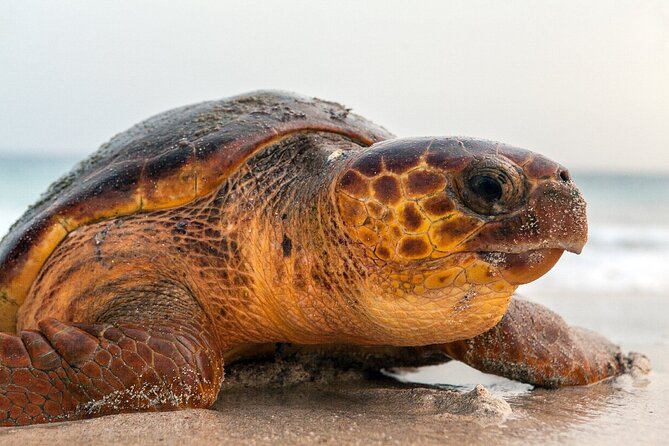
A sea turtle quietly choosing a nesting site is the heart of this Sal Island evening. You watch from the beach as she tests the sand, digs a hole, lays her eggs, hides the nest, and crawls back to the ocean. The process is slow and easily missed if people make noise or move carelessly, so patience matters.
I like the wild setting, with no staged animal encounter, and the small maximum of 16 people. I also like the short three-hour format and hotel pickup from Santa Maria, which makes this easy to fit into a beach holiday. The main caution is that nature sets the schedule. A late pickup, rough conditions, or a turtle that feels unsafe can shorten what you see.
In This Review
- Key points
- Watching a turtle make its own decision
- An 8:00 PM start from Santa Maria
- The beach briefing sets the rules
- Waiting is not wasted time
- The nesting sequence, step by step
- Why the small group matters
- What the $82.22 price includes in practical terms
- Who will enjoy this Sal Island evening
- Service matters as much as the turtle
- Practical tips for a better night
- Cancellation and booking details
- Should you book the Turtle Experience in Sal Island?
- FAQ
- Where does the Turtle Experience take place?
- What time does the activity start?
- How long does the experience last?
- Is hotel pickup available?
- How many people can join the tour?
- What will I see on the beach?
- Do I need a certain fitness level?
- Can I cancel for a full refund?
Key points
- Turtle nesting in the wild: Watch a sea turtle select a site, dig, lay 65 to 100 eggs, cover the nest, and return to the sea.
- 8:00 PM hotel pickup: The evening begins with collection from your hotel in Santa Maria.
- Small group limit: The tour accepts a maximum of 16 people, a useful size for a quiet beach encounter.
- Guide briefing first: Your guide explains turtle behavior, the nesting process, and how to act on the beach.
- Patience is part of the tour: Turtles may stay away if they sense danger, noise, or disturbance.
- $82.22 per person: The price covers the guided evening experience and return transport, but the value depends on how much turtle activity you see.
Watching a turtle make its own decision
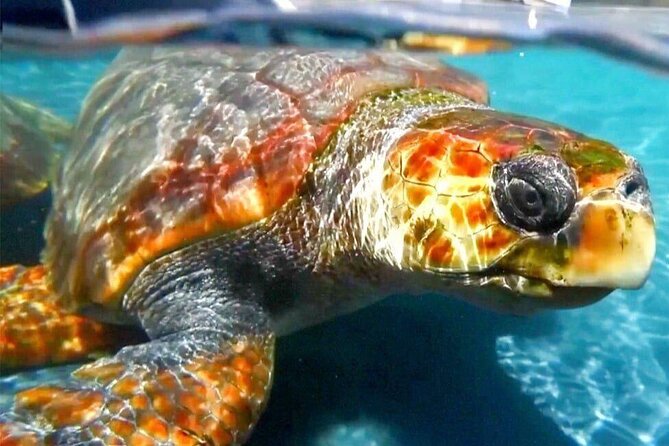
The memorable part begins when a turtle leaves the sea and starts searching for the right place to nest. She may crawl some distance up the beach, pause, inspect the sand, and move again. If the ground does not feel suitable, she abandons that attempt and looks for another spot.
That uncertainty is not a flaw in the experience. It is the point. You are watching a wild animal follow its own instincts, not an animal performing on a timetable. Still, you should know what you are buying: an opportunity to observe nesting behavior, not a guaranteed close encounter or a fixed show.
Once the turtle accepts a site, she prepares the ground and begins digging. The work is careful and methodical. When the hole is ready, she lays roughly 65 to 100 eggs, then fills the nest and spreads sand around it to hide the location before heading back toward the sea.
The guide’s role is especially important here. A calm explanation helps you understand why the group must wait, keep its distance, and avoid actions that could frighten the turtle. This is not the kind of outing where you should expect constant commentary or entertainment. The natural event supplies the drama.
Other Santa Maria days people book alongside this one:
- Experience on Sal Island with native and certified guide (including sharks)
★ 5.0 · 1,166 reviews - Horse Riding in Sal Island – Cabo Verde
★ 5.0 · 500 reviews - Santa Maria, Sal: All inclusive Salt Lake, Blue Eye and Shark Bay
★ 5.0 · 311 reviews
An 8:00 PM start from Santa Maria
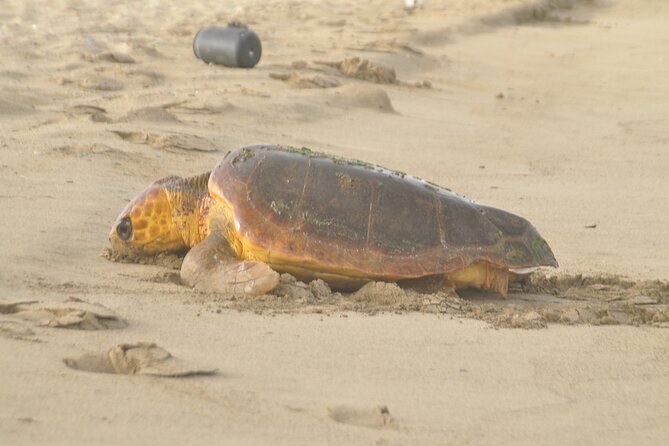
The evening starts with hotel pickup at 8:00 PM. That simple arrangement is useful in Santa Maria, where you do not need to arrange a separate taxi to find the meeting point. Pickup is offered, and the tour returns you to your hotel after the beach visit.
The experience lasts about three hours, so you should expect the evening to include transport, the introductory talk, waiting time, turtle observation, and the return journey. The exact amount of time spent watching a turtle depends on what happens on the beach.
The tour is also near public transportation, though hotel pickup is the more practical choice if it is available for your accommodation. Confirm your pickup details at booking and keep your phone available. One poor experience involved a pickup arriving about 45 minutes late, causing the group to miss part of the activity. That delay appears to have been a service problem rather than a planned part of the evening, but it is a useful reminder to clarify the meeting arrangement before setting out.
The beach briefing sets the rules
At the beach, the guide gives an introduction to the turtles and explains what you will see. You learn how a turtle approaches the sand, chooses a nest site, digs, lays eggs, disguises the nest, and returns to the water.
This briefing gives the evening a clear purpose. Without it, the waiting could feel like standing in the dark with no idea what is happening. With it, you can read the turtle’s movements and understand why a pause may last longer than expected.
The guide must also set the tone for the group. Turtles are cautious animals, and the activity depends on them feeling safe enough to come ashore. You should be ready to follow instructions, stay quiet when needed, and avoid treating the animal like a photo opportunity.
The guide service has received strong praise for being pleasant and helpful, and the experience can be conducted in English and Spanish. However, communication has not been perfect on every occasion. If you need detailed explanations in a particular language, confirm that before booking rather than assuming the same arrangement every night.
Waiting is not wasted time
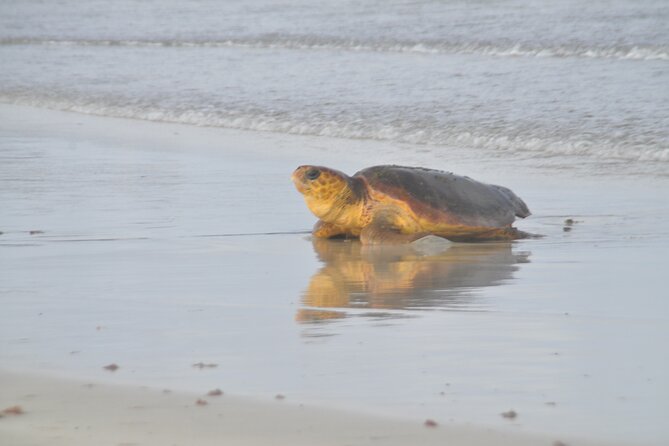
The biggest mental adjustment is accepting that the tour may begin with waiting. The turtle may not appear immediately. She may come ashore, decide the beach is unsuitable, and turn back. She may also remain cautious if the group is noisy or if she senses movement.
I see this as a good test of expectations. If you want a guaranteed animal sighting with a fixed schedule, this may frustrate you. If you are happy to watch a natural process unfold at its own speed, the waiting becomes part of the lesson.
The tour description says a turtle may lay between 65 and 100 eggs. That number gives you a sense of the work involved. The female must create a hole deep enough to protect the eggs, complete the laying process, cover it, and camouflage the site before returning to the sea.
Do not expect every minute to be filled with action. The most important moments may be quiet ones: the turtle checking the sand, settling into position, or using her flippers to cover the nest. A guide who explains these actions without rushing you can make the difference between a confusing wait and a meaningful nature experience.
Same archipelago, a completely different island day:
- Lounge Catamaran SODADE Half-Day
★ 5.0 · 295 reviews - Lounge Catamaran SODADE Half-Day (Adults Only)
★ 5.0 · 232 reviews - All inclusive full-Day Tour in Sal Island (Lunch and all fees included)
★ 4.5 · 216 reviews - Sal Island: Private Transfer SID Airport and hotel in Santa Maria or vice versa
★ 5.0 · 100 reviews
The nesting sequence, step by step
The sequence is straightforward, but each stage has a reason.
First, the turtle comes up from the water and looks for a nesting place. She may travel farther up the beach or inspect more than one patch of sand. The choice of ground matters, and unsuitable sand can send her searching again.
Next, she starts preparing the site. You watch her work the sand and begin digging a hole. This is the moment when the group needs to remain especially controlled. Sudden movement or noise can make the turtle stop.
When the hole is ready, she lays the eggs. The usual range given for this experience is 65 to 100 eggs. Afterward, she fills the hole with sand and works around the area to camouflage the nest. That final act helps conceal the eggs from danger and makes the original location harder to identify.
The turtle then returns to the sea. The end can feel surprisingly quiet after the effort of nesting. You do not follow her into the water or interfere with the nest. The value lies in seeing the entire natural cycle while leaving the beach unchanged.
Why the small group matters
A maximum of 16 people is a sensible limit for this type of activity. A smaller group is easier for a guide to control, and there are fewer bodies, voices, and lights near a nervous animal.
It is not a private tour, so you should not expect complete solitude. Still, 16 people is more manageable than a large coach group spreading across the sand. The guide can give instructions to everyone and keep the focus on the turtle’s behavior.
Group discipline remains important. The small size helps, but it does not remove the need for quiet and patience. If you book, treat the beach as a wildlife setting rather than a normal sightseeing stop.
What the $82.22 price includes in practical terms
At $82.22 per person, this is not a cheap evening add-on. The value comes from the guided access to a special natural event, the explanation of the nesting process, hotel pickup, and the return ride. You are paying for organization as well as the chance to see something you would not easily arrange on your own.
The price feels easier to justify if you care about wildlife and want a structured evening. It is less attractive if your main goal is a guaranteed close view or a quick activity with no waiting. The turtle may be cautious, and the actual observation time cannot be promised in advance.
The small group also adds value. With no more than 16 people, the setting should be easier to manage than a large commercial outing. Still, the price does not remove the natural uncertainty. You are paying for a responsible opportunity, not a result.
This experience is booked an average of 101 days ahead, which suggests that you should not leave it until the last minute if turtle nesting is high on your Sal Island plans. The advance booking pattern may also reflect limited group capacity, since only 16 places are available.
Who will enjoy this Sal Island evening
I would recommend this outing to people who enjoy wildlife, photography without demanding a perfect picture, and guided nature activities. It suits couples, families with patient older children, and anyone who wants an evening away from restaurants and resort entertainment.
It also works well for visitors who value an educational angle. The guide explains not only what you are seeing, but why the turtle behaves cautiously and why the nesting process takes time. That gives the outing more substance than a simple beach transfer.
You need a moderate level of physical fitness. The tour takes place on a beach at night, and you may spend time waiting before and during the turtle’s approach. The supplied details do not specify the walking distance, beach surface, or seating arrangements, so ask the operator if those points matter to you.
I would be more cautious about recommending it to very young children who cannot stay quiet or wait without constant activity. I would also warn anyone with a tight evening schedule that pickup delays or a slow turtle can affect the timing.
Service matters as much as the turtle
The strongest part of the experience is the wildlife encounter itself, along with the guide’s pleasant manner and clear purpose. A good guide helps you understand that the turtle is in charge and that restraint is part of responsible viewing.
The main service concern is punctuality. One booking involved a delay of about 45 minutes and missed part of the experience. A response from the company owner and guide acknowledged the problem and explained that the delay affected the pickup. That exchange suggests the operator did address the complaint, but you should still confirm the pickup time and contact method before the evening begins.
The guide has also handled explanations in English and Spanish. That is useful for mixed-language groups, though you should confirm the language you need. Clear instructions are not a small detail here. They affect both your understanding and the turtle’s safety.
Practical tips for a better night
Arrive ready at your hotel before 8:00 PM. Keep your phone charged, since pickup communication may matter. If you are not sure where the vehicle will meet you, ask for the exact arrangement before the start time.
Wear clothing and shoes suitable for a beach outing at night. The information provided does not specify equipment or seating, so do not assume that chairs, lights, or other comfort items will be supplied. Pack only what you can carry easily and follow the guide’s instructions about belongings and movement.
Most of all, set your expectations correctly. You might wait longer than expected. You might see a turtle change nesting sites. You might see the full process, including egg-laying, camouflage, and the return to the sea. All three possibilities are part of a wild encounter.
Avoid making the evening about getting the closest possible photograph. The turtle’s sense of safety comes first, and the guide’s instructions should be treated as non-negotiable. A respectful group has a better chance of seeing the animal complete its work.
Cancellation and booking details
You receive confirmation when you book, and free cancellation is available up to 24 hours before the experience begins. If you cancel less than 24 hours before the local start time, you do not receive a refund, and changes within that period are not accepted.
The listed start time is 8:00 PM, the duration is about three hours, and mobile tickets are offered. Pickup is available, the activity is near public transportation, and the group limit is 16 people.
Should you book the Turtle Experience in Sal Island?
Book it if you want a guided chance to observe a real nesting turtle and you are willing to wait quietly for nature to cooperate. The strongest reasons are the wild setting, the full nesting sequence, the small group limit, and the convenience of evening hotel pickup.
Think twice if you need a guaranteed sighting, a perfectly punctual schedule, or a fast-paced activity. The 45-minute pickup problem reported in one case is worth keeping in mind, so confirm the meeting details and allow some flexibility.
At $82.22, I consider this a worthwhile choice for wildlife-focused visitors who understand its limits. The turtle is not there to entertain you. If you accept that, the sight of her laying dozens of eggs, hiding the nest, and returning to the sea can be one of Sal Island’s most memorable evenings.
FAQ
Where does the Turtle Experience take place?
The experience is based in Santa Maria on Sal Island, Cape Verde, and includes a visit to the beach to observe a nesting turtle.
What time does the activity start?
Hotel pickup begins at 8:00 PM.
How long does the experience last?
The activity lasts approximately three hours, including the beach visit and return to your hotel.
Is hotel pickup available?
Yes. Pickup is offered, and the tour returns you to your hotel after the beach experience.
How many people can join the tour?
The maximum group size is 16 people.
What will I see on the beach?
You may see a turtle choose a nesting site, prepare the sand, dig a hole, lay between 65 and 100 eggs, cover and camouflage the nest, and return to the sea.
Do I need a certain fitness level?
A moderate level of physical fitness is recommended.
Can I cancel for a full refund?
Yes, if you cancel at least 24 hours before the experience start time. Cancellations or changes made less than 24 hours before the local start time are not refunded or accepted.
Just added around Santa Maria
- Sal island: Espargos city tour, Local life and Cape Verde Tapas★ 4.5 · 22 reviews
- Sal island: Private Santa Maria City Tour, Street Art and Tapas★ 5.0 · 6 reviews
- Secrets of Sal Island 4×4 Tour with Pedra da Lume Salt Lake★ 4.5 · 6 reviews
- Sal Island: 3-Hour Private Tour with Floating in Salt lake & Shark Watching★ 5.0 · 8 reviews
- Small Group Full Day Island Tour in Sal★ 4.0 · 12 reviews
- Sal Island: Guided Full-Day Highlights Tour with Lunch★ 5.0 · 5 reviews
- Sal Island All-inclusive Adults-only Catamaran Cruise★ 5.0 · 3 reviews
- Private Full-Day Tour of Sal Island★ 5.0 · 10 reviews
Sal Island Tours, compared.
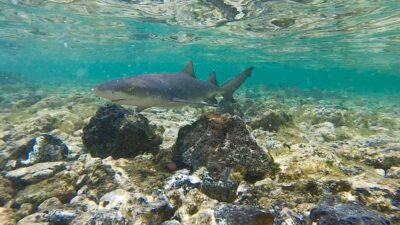
Island Experience Tour with a Certified Local Guide
Read our review →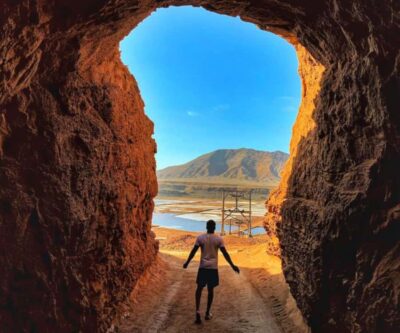
All-Inclusive Salt Lake, Blue Eye and Shark Bay Tour
Read our review →
Experience on Sal Island with native and certified guide (including sharks)
Read our review →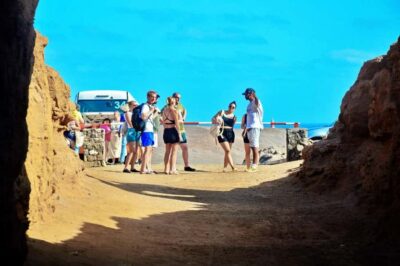


Complete Excursion and Flight on the Zipline Cabo Verde
Read our review →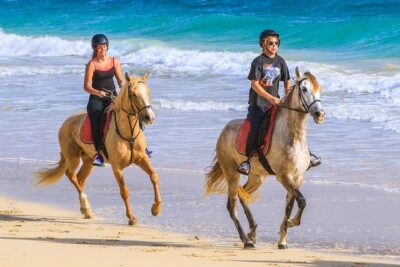

Browse the lists this tour appears in